Introduction: A High-Stakes Meeting
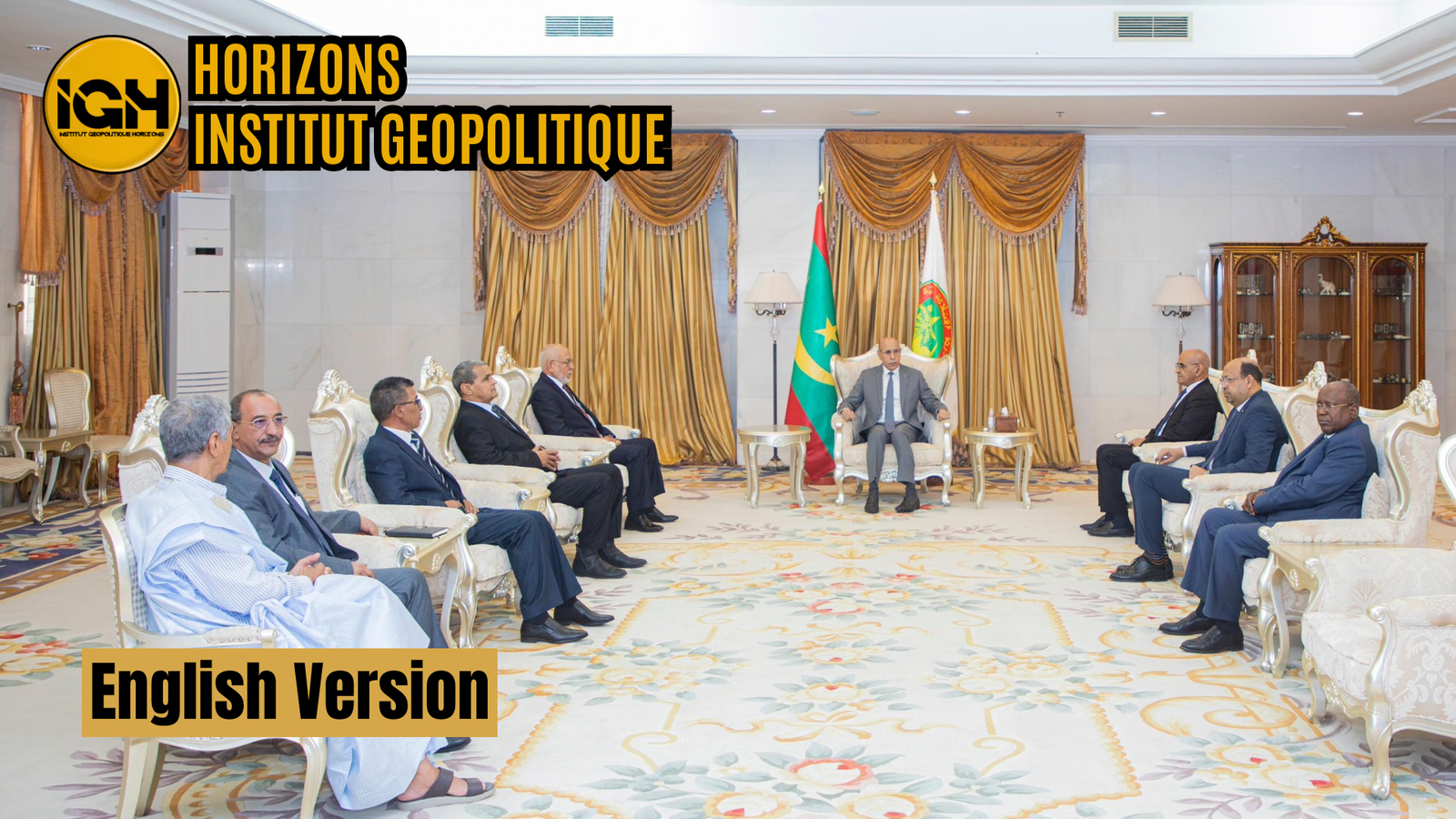
The reception of a Polisario Front delegation by the Mauritanian president on May 30, 2025, goes beyond the usual protocol framework of diplomatic meetings. The very composition of this delegation, including « senior military » and security officials of the militia, reflects the strategic importance the separatist movement attaches to this meeting. However, according to exclusive information obtained from a high-level source in Nouakchott, this visit concealed much more ambitious objectives than the official statements suggest.
This meeting takes place one week after an important Algerian-Mauritanian meeting held on May 23-24, 2025, in Nouakchott, on the sidelines of the 7th edition of the Algerian Products Fair. This closely timed diplomatic sequence is not coincidental and reveals obvious coordination between Algiers and its proxy in the region.
The Polisario Strategy: Between State Narrative and Diplomatic Pressure
A Delegation Calibrated to Simulate a State Meeting
The composition of the Polisario delegation merits in-depth analysis:
- Hamma Salama, « president of the Sahrawi National Council » and member of the national secretariat of the Polisario Front
- Saleck Bobbih, « minister advisor to the presidency of the Republic »
- Taleb Ami Deh, « deputy chief of staff of the Sahrawi army »
- Hamma Malou, « director of security and documentation »
- Mohamed Mouloud Dafa Ali, « member of the general staff » of the militia
This configuration, mixing individuals adorned with fictitious ministerial and military titles, was clearly aimed at projecting the image of a state-to-state meeting. The Polisario thus sought to legitimize its status as a state interlocutor, a recurring strategy in its regional diplomatic efforts to accredit the existence of the so-called « SADR, » a fictitious entity not recognized by the UN or by the majority of the international community.
The Real Issues of the Meeting: A Triple Objective
Beyond the official statements referring to strengthening « brotherly ties » and « cooperation, » our sources reveal that the Polisario delegation was pursuing three major objectives:
Mauritania’s Firmness: A Non-negotiable Position of Principle
President Ghazouani’s Categorical Refusal
Faced with the Polisario’s requests, the Mauritanian president maintained a position of remarkable firmness. According to our source, Mohamed Ould Cheikh El Ghazouani:
- Categorically refused to reverse the militarization of the Lbriga zone, describing this decision as a « national security issue » for Mauritania
- Maintained the qualification of « sensitive defense zone » adopted since January 2021, designed to protect Mauritanian territory against terrorist incursions, drug trafficking, and organized crime
- Reaffirmed Mauritanian sovereignty over its security decisions, leaving no room for maneuver for external pressures, whether from the Polisario or its Algerian sponsors
A Revealing Recommendation
More significant still, and this is exclusive first-hand information, the Mauritanian president reportedly recommended to the Polisario delegation to « take into consideration the Moroccan autonomy proposal. » This statement, confirmed by our high-level source, marks a turning point in the Mauritanian position on the Sahara issue, traditionally more neutral or even favorable to the Polisario under Algerian pressure.
The Strategic Importance of the Lbriga Zone
A Crucial Geographic Lock for Illicit Activities
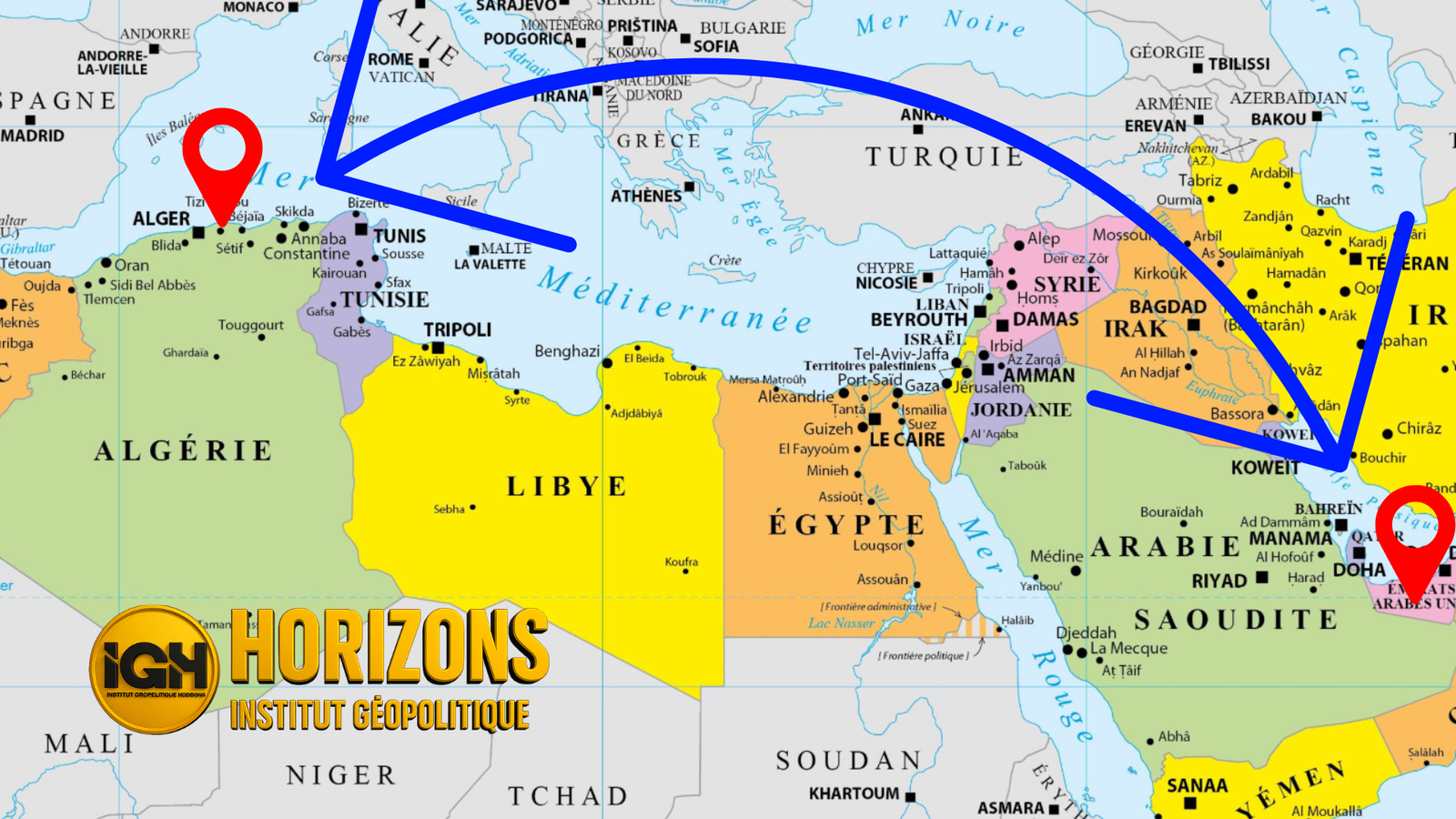
The Lbriga zone, located at the Algerian-Mauritanian border near the Tindouf camps, represents a major geostrategic issue for several reasons:
- Key geographical position: It constitutes a crossing point between the Tindouf camps and Mauritanian territory
- Historical transit zone: Used for decades for the movement of people and goods, including arms trafficking, drugs, and smuggling
- Polisario’s maneuvering space: The separatist militia maintained a significant presence there for its logistical, operational activities and lucrative trafficking
The Implications of Militarization for the Polisario
The Mauritanian decision to militarize this zone has direct and devastating consequences for the Polisario’s operational capabilities:
- Drastic restriction of movements: Movements between the Tindouf camps and Mauritania are now strictly controlled by the Mauritanian army
- Increased technological surveillance: Installation of radars in Zouerate and an air control center in Fdirek allowing real-time surveillance
- Total prohibition for civilians: The zone is now exclusively reserved for Mauritanian military forces, cutting off smuggling routes
- Economic asphyxiation: The revenues derived from illicit trafficking, essential to financing the Polisario, are considerably reduced
The Regional Context: The Noose Tightens Around the Polisario
The Moroccan-Mauritanian Rapprochement: A Strategic Alliance
Mauritania’s firmness is part of a broader context of rapprochement with Morocco:
- Opening of new border posts: Amgala-Bir Moghrein soon operational and Twajil under development
- Development of common infrastructure: Trans-Saharan roads, logistics platforms, major energy projects
- Strengthened security cooperation: Intelligence exchanges, joint patrols, operational coordination
- Shared economic vision: Integration into the Royal Atlantic Initiative for regional development
The Growing Isolation of the Polisario and its Algerian Sponsor
This regional evolution contributes to the progressive isolation of the Polisario Front and highlights the limits of the Algerian strategy:
- Loss of maneuvering space: Mauritanian restrictions deprive the Polisario of vital routes for its supplies
- Weakening of regional support: The Mauritanian position reflects a broader trend of disengagement from the Polisario
- Failure of Algerian pressure: Despite the Algerian-Mauritanian meeting of May 23-24, Nouakchott maintains its line
- Pressure for a realistic solution: The recommendation to accept autonomy reflects growing pragmatism in the face of the current impasse
Prospective Analysis: Strategic Implications
A Clear Message to Regional Actors
The Mauritanian position sends several strong signals:
- To Morocco: Confirmation of the strategic partnership and validation of the autonomy proposal as a credible solution
- To the Polisario: End of the era of complacency and need to adapt to new geopolitical realities
- To Algeria: Demonstration of the limits of its influence and the ineffectiveness of its proxy strategy
- To the international community: Signal of a regional realignment favorable to a pragmatic political solution
Evolutionary Scenarios
Several developments are foreseeable:
- Intensification of Moroccan-Mauritanian cooperation: New infrastructure projects and deepening of the security partnership
- Desperate attempts by the Polisario: Possible provocations or escalations in an attempt to regain relevance
- Algerian maneuvers: Increased economic or diplomatic pressure on Nouakchott to try to influence its position
- Constructive role of Mauritania: Possible emergence of Nouakchott as a credible mediator for a way out of the crisis
Conclusion: A Revealing Failure and a Historic Turning Point
The meeting of May 30, 2025, marks a decisive turning point in the evolution of the artificial conflict in the Sahara. The Polisario’s failure to make Mauritania bend on the Lbriga issue and the Mauritanian recommendation to accept autonomy constitute a double setback for the separatist militia and its Algerian sponsor.
This diplomatic sequence reveals several inescapable realities:
First, the Polisario’s strategy of presenting itself as a « normal state » through diplomatic staging reaches its limits in the face of the pragmatism of states in the region. Mauritania, by refusing to play this game, demonstrates that national security interests take precedence over ideological considerations inherited from the Cold War.
Second, the growing isolation of the Polisario reflects a regional awareness of the real nature of this conflict: not a national liberation struggle, but a geopolitical instrument in the hands of Algiers to destabilize Morocco and maintain permanent tension in the region.
Finally, the Mauritanian recommendation concerning autonomy opens a significant breach in the front of refusal. If a country traditionally close to the Polisario like Mauritania now considers autonomy as a viable option, this could encourage other states to adopt a similar position.
Mauritania, by firmly defending its security interests while proposing a realistic way out, emerges as a mature and responsible actor in this issue. This evolution augurs a possible acceleration towards a definitive solution, based on political realism rather than the ideological chimeras of the past.
© 2025 Horizons Geopolitical Institute – Do not reproduce without authorization