Geopolitical Analysis
Maghreb Sahel – Atlantic Africa
HGI-RE Maghreb-20250905
Abdelhakim Yamani
Tangier, September 5, 2025
Executive Summary
President Tebboune’s address at IATF 2025 reveals an almost verbatim replication of the Abidjan Doctrine formulated by Mohammed VI in 2014. This comparative analysis exposes systematic « discursive recycling » of Moroccan strategic frameworks. The simultaneous filing of a Malian complaint against Algeria at the ICJ demonstrates the disconnect between stated ambitions and geopolitical reality, highlighting the widening gap between pan-African rhetoric and effective influence capabilities.
Context of Tebboune’s Address
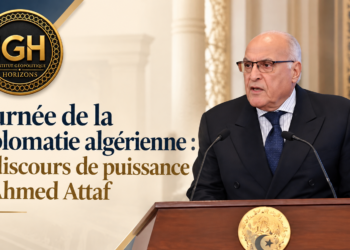
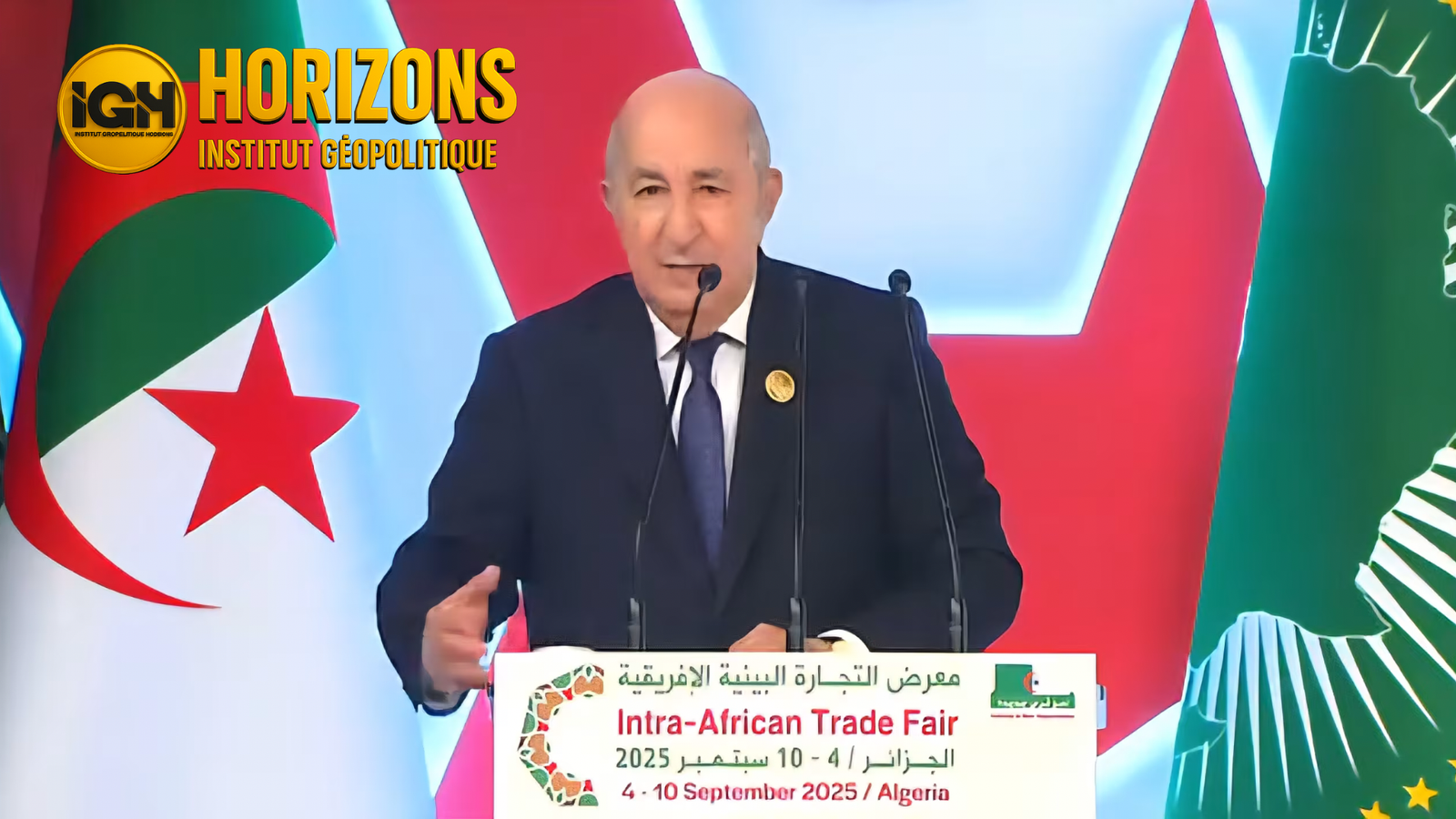
During the inauguration of the 4th edition of the Intra-African Trade Fair (IATF) in Algiers on September 4, 2025, President Abdelmadjid Tebboune delivered a strategic address within a continental context focused on strengthening economic integration. The Algerian head of state notably emphasized that « Africa can no longer settle for 3% of global trade while holding 30% of natural resources »1.
This declaration forms part of an effort to reposition the continent within the global economy, while simultaneously revealing strong inspiration from the Moroccan strategy formulated eleven years earlier.
The Abidjan Doctrine as Conceptual Matrix
The Abidjan Doctrine, articulated by Mohammed VI at the Morocco-Ivorian Economic Forum in February 2014, established a fundamental strategic framework for African integration. This doctrine laid the groundwork for South-South cooperation, infrastructure development, youth empowerment, and continental economic sovereignty assertion2.
Comparative analysis reveals that Tebboune’s discourse reproduces these priorities in an almost literal manner, constituting what can be characterized as « masterful discursive recycling. »
Comparative Analysis of Strategic Statements
| Tebboune (IATF 2025) | Mohammed VI (Abidjan 2014) | Analysis |
|---|---|---|
| « Africa can no longer settle for 3% of global trade while holding 30% of natural resources » | « Africa holds considerable wealth but remains marginalized in international trade » | Near-verbatim replication of diagnosis on African economic marginalization |
| « We must build an integrated continent with modern infrastructure like the trans-Saharan highway » | « Establishing transport and energy infrastructure is imperative to connect the continent » | Identical priority accorded to strategic infrastructure |
| « We must assert the economic sovereignty of African states » | « Economic sovereignty is the key to African progress and dignity » | Core concept replicated identically |
HGI Note: The Algerian Initiative for Sahelian Mediterranean Access
In his IATF 2025 address, President Tebboune outlined projects aimed at facilitating Sahelian countries’ access to the Mediterranean. He referenced major continental infrastructure projects including the trans-Saharan highway linking Algiers to Lagos via Tamanrasset, alongside new air and maritime connections between African capitals, designed to strengthen intra-African trade without European transit3.
This approach directly echoes the Moroccan initiative for facilitating Sahelian Mediterranean access. Algeria’s approach similarly contributes to Sahelian landlocking solutions through economic corridor creation, particularly via road, rail, air, and maritime transport, to better integrate the region at Mediterranean and continental levels.
This announcement operates within a competitive pan-African logic, mirroring Moroccan initiatives for opening Sahelian Mediterranean access through direct economic and logistical pathways4.
⚠️ Major Geopolitical Contradiction
On the same day as Tebboune’s address promoting Sahelian cooperation, Mali filed a petition against Algeria before the International Court of Justice. Bamako accuses Algiers of premeditated destruction of a Malian drone in the Kidal region between March 31 and April 1, 2025, characterizing this act as « hostile aggression » violating international principles and the UN Charter5.
The Malian communiqué also denounces « deliberate obstruction » of counter-terrorism operations and suggests possible « collusion between Algerian authorities and terrorist groups. » This judicial escalation reveals profound tensions that directly contradict Tebboune’s integrationist discourse.
This temporal coincidence perfectly illustrates the disconnect between Algiers’ declared ambitions and the conflictual reality of its relations with Sahelian countries supposedly benefiting from its integration proposals.
Strategic Effectiveness Differential
While Mohammed VI translated his doctrine through concrete mechanisms—the Mohammed VI Investment Fund, regional insertion projects, structural reforms—Algeria has failed since 2019 to materialize its African ambitions through tangible achievements.
The Mali dispute reveals an additional dimension: Algiers’ inability to maintain peaceful relations with its strategic Sahelian partners, a prerequisite for sustainable economic cooperation. This asymmetry demonstrates that continental leadership competition extends beyond declaratory intent, requiring operational capacity to transform visions into enduring policies.
Cross-Strategic Conclusion
Comparative analysis demonstrates that Tebboune’s discourse constitutes masterful yet diminished recycling of the Abidjan Doctrine. The simultaneous Mali dispute reveals fundamental strategic incoherence that compromises Algerian proposal credibility and exposes Algeria’s fragile African approach.
This contradiction illustrates a fundamental mutation in contemporary African geopolitical dynamics: African states now prioritize partners capable of maintaining coherence between declared ambitions and effective diplomatic practices. This coherence requirement distinctly differentiates Moroccan strategy from Algeria’s approach, consolidating Rabat’s comparative advantage in continental influence competition.
References
1 Radio Algeria, « The President of the Republic at IATF 2025 », September 4, 2025.
2 Kingdom of Morocco, « Full text of HM the King’s speech at the Morocco-Ivorian Economic Forum », Abidjan, February 2014.
3 TSA, « IATF 2025: Tebboune’s historic plea for Africa », September 2025.
4 APA News, « Tebboune establishes his African vision as diplomatic showcase », September 2025.
5 Government of Mali Transition, « Official communiqué on filing petition against Algeria before ICJ », September 4, 2025.
@Institut Géopolitique Horizons