Horizons Geopolitical Institute
Abdelhakim Yamani
May 23 2025
Executive Summary
The diplomatic tour of Sheikh Shakhboot Bin Nahyan Al Nahyan in the Alliance of Sahel States (AES) countries in May 2025, followed by Saddam Haftar’s strategic visit to Niger, reveals the implementation of an Emirati containment strategy explicitly targeting Algeria. This geopolitical architecture, articulated around the Benghazi-Niamey-Bamako-Ouagadougou axis and reinforced by convergence with the Moroccan Royal Initiative, materializes a methodical encirclement of Algerian influence in the Sahel. The United Arab Emirates exploit the geopolitical vacuum left by Western withdrawal to build a sanitary cordon around Algiers, combining economic diplomacy, security cooperation, and reorientation of energy flows toward the Atlantic.
Introduction: The Emergence of a New Sahelian Great Game
The Sahel has experienced a major geopolitical reconfiguration since 2020, characterized by the progressive withdrawal of Western powers and the emergence of new regional actors. In this context of strategic vacuum, the United Arab Emirates deploy a sophisticated influence diplomacy that goes far beyond economic considerations to inscribe itself in a logic of geopolitical containment.
The diplomatic sequence of May 2025 – Emirati visit to the three AES capitals followed by Saddam Haftar’s mission to Niamey – is not coincidental. It translates the activation of an Algeria encirclement strategy meticulously orchestrated from Abu Dhabi, exploiting Sahelian fractures to redraw regional balances to the detriment of Algiers.
I. Architecture of Containment: The Variable Emirati Geometry
1.1 The Abu Dhabi-AES Axis: An Alliance of Geopolitical Circumstances
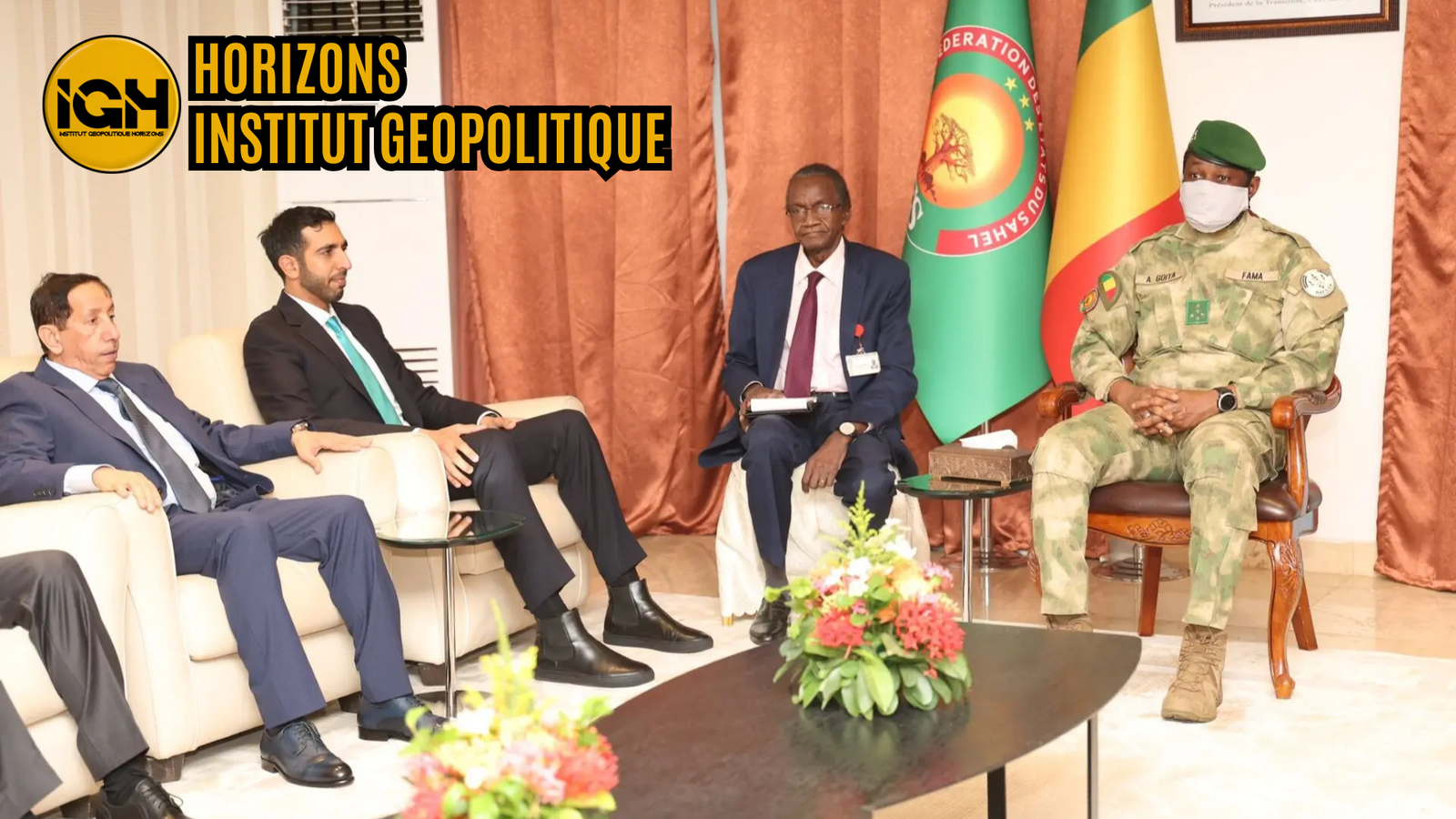
Sheikh Shakhboot’s tour in the three capitals of the Alliance of Sahel States materializes a convergence of strategic interests. The Emirates offer the Malian, Nigerien, and Burkinabè military juntas what no other power can guarantee: unconditional support without democratic requirements, coupled with massive investments and tangible security support.
In Mali, the extension of the 2019 defense protocol and investment projects in solar energy (Touna plant, 93 MW) are part of a sustainable partnership logic. In Niger, discussions on mining and energy development aim to secure Emirati supply of uranium and rare metals. In Burkina Faso, despite a more discreet visit, economic cooperation agreements strengthen Emirati grip on agriculture and infrastructure.
1.2 The Haftar Factor: When Benghazi Completes Abu Dhabi’s Strategy
Saddam Haftar’s visit to Niger, culminating in his official decoration, reveals the military dimension of Emirati containment. This sequence is not fortuitous: it occurs immediately after Sheikh Shakhboot’s tour, suggesting strategic coordination between the Emirates and the Libyan National Army (LNA).
The security agreements concluded between Saddam Haftar and Abdourahamane Tchiani focus on border control, counter-terrorism, and above all, the possible takeover by the LNA of the former French base of Madama. This strategic installation, located on the Libyan-Nigerien border, would constitute an advanced base for cross-border operations, completing the encirclement apparatus of Algeria from the South.
II. Strategic Motivations: Why Contain Algeria?
2.1 Energy Rivalries and Torpedoing of the Trans-Saharan Gas Project
Algeria represents a direct competitor to the Emirates in European and African energy markets. With its considerable gas reserves and geographical proximity to Europe, Algiers has strategic assets that the Emirates seek to neutralize. Sahelian containment aims to limit the expansion of Algerian energy influence toward sub-Saharan Africa, thus preserving Emirati market shares.
The most strategic dimension of this energy rivalry lies in Emirati financing of the Africa Atlantic Gas Pipeline (AAGP), connecting Nigeria to Morocco via the Atlantic. This major financial support from Abu Dhabi sounds the death knell for the competing Algerian trans-Saharan gas pipeline project, which was to connect Algeria to Nigeria via Niger. By financing the AAGP, the Emirates definitively neutralize Algerian ambitions to become the gas hub of West Africa, while strengthening the Rabat-Abuja axis to the detriment of Algiers.
Emirati energy projects in the Sahel – particularly in solar and green hydrogen – are part of this competitive logic. By securing energy partnerships with AES countries, the Emirates deprive Algeria of natural outlets for its gas and electricity exports.
2.2 Struggle for Geopolitical Influence in the Maghreb-Sahel
Algeria has traditionally exercised predominant influence in the Sahel, relying on its historical ties with African liberation movements and its non-alignment diplomacy. This regional hegemony directly collides with Emirati ambitions of expansion toward sub-Saharan Africa.
Emirati containment aims to break this geographical and political continuity between Algeria and its traditional Sahelian allies. By establishing itself as the privileged partner of new Sahelian military elites, the Emirates create a sanitary cordon that diplomatically isolates Algeria from its strategic backyard.
2.3 Competition over Critical Raw Materials
The Sahel contains important reserves of uranium, gold, and rare earths, crucial resources for Emirati technological ambitions. Algeria, due to its geographical proximity and historical ties, constitutes a natural competitor for access to these raw materials.
The Emirati strategy aims to secure exclusive or privileged access to Sahelian resources, short-circuiting traditional commercial circuits dominated by Algeria. Mining investments in Niger and agricultural projects in Mali are part of this logic of economic appropriation.
III. Operational Mechanisms: The Levers of Containment
3.1 Economic Diplomacy: The Weapon of Dependence
The Emirates deploy massive economic diplomacy in the Sahel, promising nearly $97 billion in investments in Africa. This apparent generosity masks a strategy of creating structural economic dependencies.
Emirati infrastructure projects – solar plants, agricultural complexes, special economic zones – aim to integrate Sahelian economies into the Emirati orbit, mechanically reducing their room for maneuver vis-à-vis other partners, notably Algeria. This economic soft power strategy proves particularly effective against Sahelian states seeking financing for their development.
3.2 Security Cooperation: The Alliance of Convenience
Military and security cooperation constitutes the second pillar of the Emirati apparatus. Arms deliveries, training programs, and defense agreements create military dependency links that complicate any future geopolitical reorientation.
The involvement of Haftar’s LNA adds a paramilitary dimension to this strategy. Potential control of the Madama base by pro-Emirati Libyan forces would create a permanent military foothold at Sahelian borders, institutionalizing Emirati presence in the region.
3.3 Cultural and Religious Diplomacy: Moderate Islam as Soft Power
The Emirates exploit their image of moderate and tolerant Islam to seduce Sahelian elites. This religious diplomacy, less visible but equally effective, aims to counterbalance the influence of other regional Muslim powers, notably Algeria and its traditional allies.
Emirati educational programs, scholarships, and cultural exchanges participate in this long-term strategy aimed at forming future Sahelian elites in Abu Dhabi’s orbit.
IV. The Moroccan Dimension: Convergence of Geostrategic Interests
4.1 The Atlantic Royal Initiative and AES: An Orchestrated Synergy
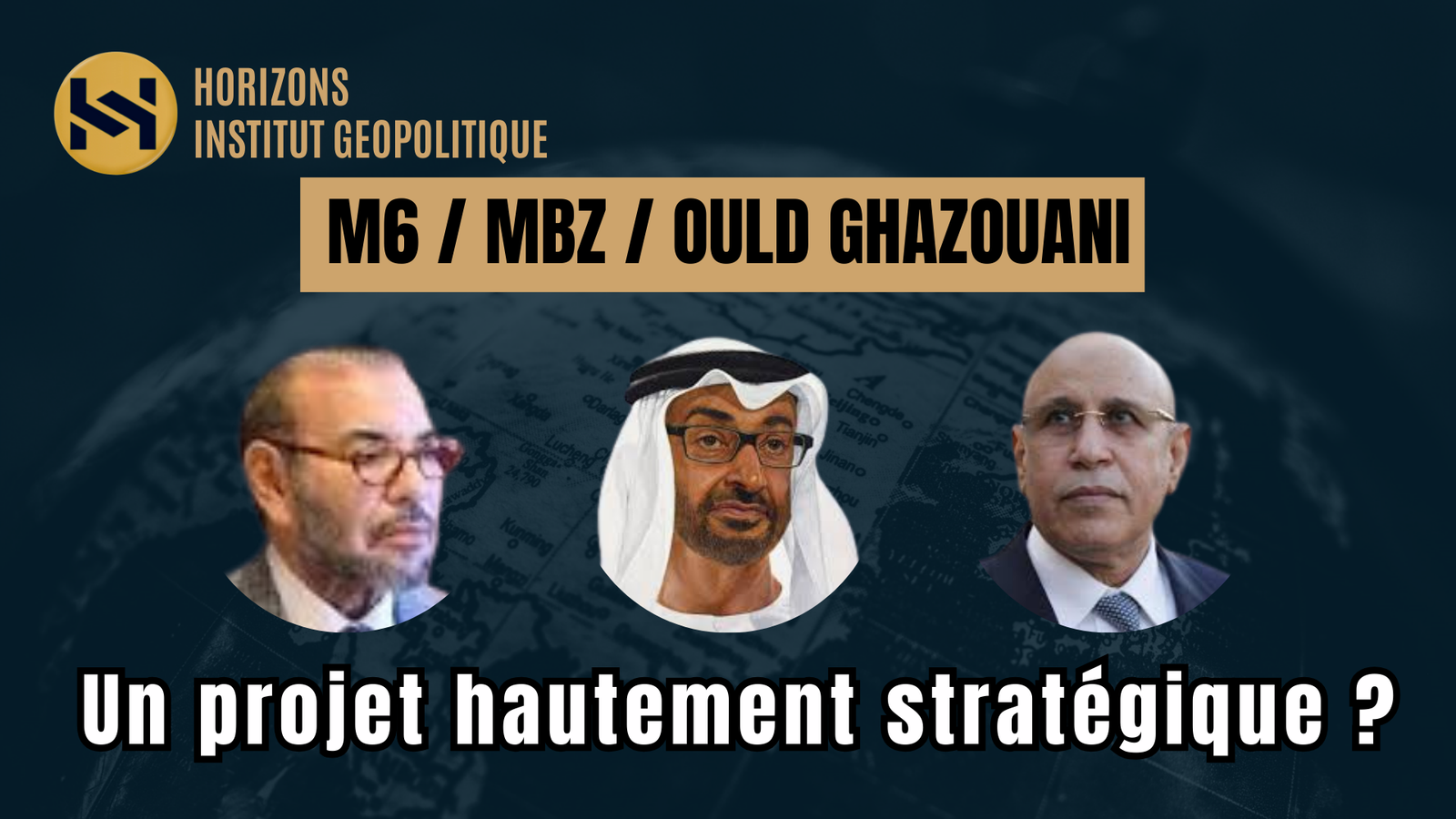
The Emirati strategy of Algerian containment articulates perfectly with the Moroccan Royal Initiative aimed at offering Atlantic Ocean access to landlocked Sahel countries, notably those of the AES. This geopolitical convergence is not fortuitous: it translates an objective alliance between Rabat and Abu Dhabi to redraw West African commercial and energy flows to the detriment of Algeria.
The Royal Initiative offers AES countries – Mali, Niger, Burkina Faso – a logistical and commercial alternative to traditional corridors controlled or influenced by Algeria. By offering direct access to the Atlantic via Moroccan ports, this initiative breaks Sahelian dependence on Algerian commercial routes, further isolating Algiers from its natural partners.
4.2 The Rabat-Abu Dhabi-AES Triangle: Architecture of a New Partnership
The Emirati visit to the Sahel thus fits into a broader triangular logic, where the Emirates serve as financial catalyst to Moroccan geopolitical ambition. Emirati financing of the AAGP and support for AES economies create conditions for South-South economic integration that systematically bypasses Algeria.
This geopolitical architecture transforms Morocco into an Atlantic platform for Sahelian exchanges, while the Emirates provide the capital and technology necessary for this reconfiguration. The AES thus becomes the Sahelian link of a strategic Atlantic-Gulf axis that definitively marginalizes Algerian ambitions for regional leadership.
V. Algerian Reactions and Counter-Strategies
5.1 Algerian Diagnosis: Between Denial and Concern
Algiers observes with concern this Emirati rise in the Sahel, seeing it as a direct threat to its geostrategic interests. Official Algerian declarations regularly denounce « external interference » in the Sahel, a transparent euphemism to designate the Emirati strategy.
However, Algeria struggles to propose a credible alternative to the Emirati charm offensive. Constrained by its own economic difficulties and traditionally cautious diplomacy, Algiers finds itself in a defensive position against an adversary with considerable financial means.
5.2 Limits of the Algerian Response
The Algerian counter-strategy suffers from several structural handicaps. First, Algiers’ limited financial means do not allow it to compete with Emirati generosity. Second, Algerian internal political instability complicates the elaboration of a coherent long-term strategy.
The de facto abandonment of the trans-Saharan gas pipeline project, torpedoed by Emirati financing of the AAGP, deprives Algeria of its main economic influence lever in the Sahel. Without a credible energy alternative to offer AES countries, Algiers finds itself disarmed against the Emirati-Moroccan seduction offensive.
Finally, Algeria’s traditional ties with certain Sahelian groups, sometimes perceived as obsolete by new military elites, constitute a handicap against the apparent modernity of the Emirati model and the attractiveness of Moroccan Atlantic opening.
Strategic Conclusion: Toward a Lasting Reconfiguration?
The Emirati containment strategy in the Sahel, amplified by its convergence with the Moroccan Royal Initiative, represents more than a simple bilateral rivalry: it illustrates the ongoing reconfiguration of African geopolitical balances. The emerging geopolitical architecture – Abu Dhabi-AES-Rabat axis reinforced by the Haftar alliance – durably redraws the map of regional influences and West African economic flows.
Emirati financing of the AAGP and support for AES Atlantic opening via Morocco create a new energy and commercial geography that structurally marginalizes Algeria. This reconfiguration exceeds the Sahelian framework to touch the entire West African space, transforming Morocco into an Atlantic hub and the Emirates into financier of this new South-South connectivity.
This strategy nevertheless presents vulnerabilities. Emirati dependence on sometimes unstable local allies (military juntas, paramilitary forces) weakens the sustainability of the apparatus. Moreover, the rise of other regional actors (Russia, Turkey, China) could complicate the Emirati game.
For Algeria, the challenge now consists of adapting its Sahelian diplomacy to new geopolitical realities, proposing a credible alternative to the Emirati-Moroccan model without compromising its own strategic interests. The loss of the trans-Saharan gas project constitutes a major setback that complicates this adaptation.
The diplomatic sequence of May 2025 thus marks a decisive stage in the emergence of a new Sahelian geopolitical order, where traditional Algerian influence finds itself contested by a methodical and sophisticated Emirati-Moroccan alliance. This reconfiguration raises broader questions about the future of regional balances in a Sahel in perpetual reconfiguration, now connected to the Atlantic rather than the Mediterranean.
—
*Horizons Geopolitical Institute – May 2025*