Horizons Geopolitical Institute
Strategic Analysis Brief
May 12, 2025
Abdelhakim Yamani, President
Executive Summary
I. State of Encirclement: Diagnosis of a Geopolitical Impasse
A. Architecture of Systemic Isolation
Multiple Regional Diplomatic Ruptures :
– Morocco: Relations severed since August 2021
– Sahel: Crisis with Mali, Niger, Burkina Faso (April 2025 drone incident)
– Mauritania: Growing border tensions
– Tunisia: Strained but maintained relations
Deterioration of International Partnerships :
– France : Major crisis with ambassador recall (April 2025)
– United States : FTO classification of Polisario in preparation
– United Arab Emirats : Rupture following failed secret negotiations (March 2025)
– Russia : Growing estrangement despite historical ties
Operational Consequences :
– Progressive closure of airspaces
– Reduction of economic partnerships
– Marginalization in international forums
– Exclusion from regional peace processes
B. The Specter of International Sanctions
Foreseeable Economic Sanctions :
– Freezing of leadership’s foreign assets
– Embargo on sensitive technologies
– Restrictions on hydrocarbon exports
– Exclusion from international payment systems
Programmed Diplomatic Sanctions :
– Suspension from international organizations
– Isolation in UN bodies
– Travel bans for officials
– Referral to international jurisdictions for crimes against humanity (Nigerien expulsions)
Projected Economic Impact :
– GDP: Estimated contraction of 15-25% within 12 months
– Reserves: Accelerated depletion (currently $46 billion USD)
– Energy sector: Loss of 40% of European markets
– Currency: Programmed collapse of the dinar
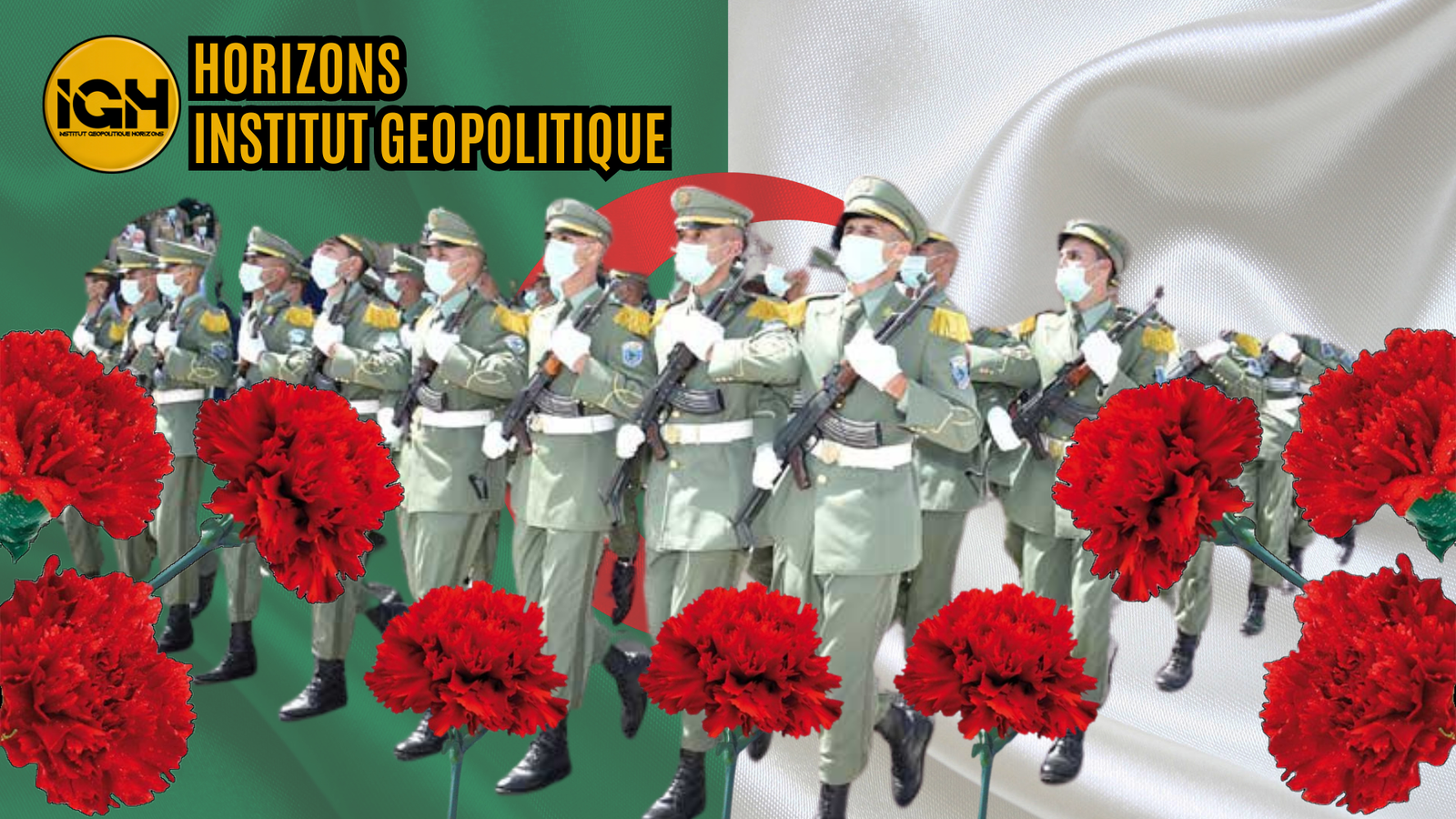
II. The Carnation Revolution as a Crisis Exit Paradigm
A. The Portuguese Fiftieth Anniversary: Lessons from a Successful Transition
Historical Overview :
– April 25, 1974: Military coup led by captains and majors
– Triggered by the radio signal « Grândola, Vila Morena » at 00:20
– Peaceful capture of strategic points in less than 24 hours
– Surrender of the Caetano government without major bloodshed
Elements Commemorated During the Fiftieth Anniversary (April 25, 2024) :
– Exemplary democratic transition (18 months)
– Immediate decolonization of Lusophone Africa
– European and international reintegration
– Transformation from colonial pariah to modern democracy
Geostrategic Results 50 Years Later :
– Portugal: stable democracy and respected EU member
– Absence of major colonial resentment
– Maintenance of privileged relations with former colonies
– Preservation of essential national interests despite decolonization
B. Transposition to the Algerian Context
Structural Similarities :
– Growing diplomatic isolation
– Resource-dependent economy
– Military as the only credible institution
– Frustrated but poorly organized civil society
Necessary Adaptations:
– Western Sahara : Acceptance of the autonomy plan as equivalent to decolonization
– Tindouf Camps : Humanitarian management as entry price
– Terrorist Links : Documented cessation of problematic support
– Internal Reforms : Gradual political opening
III. Feasibility and Modalities of a Top-Down Transition
A. Potential Agents of Change
Military Middle Management :
– Colonels aged 45-55 excluded from decision-making circles
– Officers trained in the West (France, United States)
– Regional commanders aware of impasses
– Military personnel seconded to the UN and familiar with international standards
Ideal Profile of « Algerian Captains » :
– Not involved in clandestine operations revealed by the JDD
– Trained in modern military doctrines
– Sensitive to institutional honor
– In contact with international networks
B. Sequencing of a Controlled Transition
Phase 1: Power Takeover (D+0 to D+30)
– Neutralization of compromised generals
– Public announcement of motives (national honor)
– Immediate cessation of clandestine operations
– Establishment of a National Transition Council
Phase 2: Negotiations (D+30 to D+180)
– Acceptance of the Saharan autonomy plan
– Dialogue on the issue of Tindouf camps
– Ceasefire on all diplomatic fronts
– Internal reform program
Phase 3: Reintegration (D+180 to D+720)
– Progressive lifting of sanctions
– Return to international bodies
– Reconfiguration of regional alliances
– Guided political transition toward a hybrid system
IV. Comparative Advantages of an « Algerian Carnation Revolution »
A. For Algeria
Preservation of National Interests :
– Avoidance of economic collapse
– Maintenance of territorial integrity
– Preservation of regional actor status
– Protection of energy infrastructure
Internal Legitimation :
– Restored military honor
– Preserved national pride
– Transition « by Algerians for Algerians »
– Avoidance of direct foreign interference
B. For the International Community
Regional Stability :
– Prevention of a failed state at Europe’s doorstep
– Avoidance of a major migration crisis
– Maintenance of energy supply
– Stabilization of Sahelian borders
Positive Precedent :
– Demonstration that isolation can lead to change
– Model for other transitions in the region
– Reinforcement of international norms
– Proof of the effectiveness of graduated pressure
V. Window of Opportunity and Catalysts
A. Favorable Geopolitical Timing
The Symbolism of the Portuguese Fiftieth Anniversary :
– Increased media references since April 2024
– Internationally celebrated transition model
– Abundant and accessible historical documentation
– Easily traceable parallels for educated officers
Convergence of International Pressures :
– Reconfiguration of MINURSO mandate (April 2025)
– Imminent FTO classification of Polisario
– Potential international prosecutions
– Economic sanctions in preparation
B. Potential Triggering Factors
Probable Catalytic Events:
– Appointment of Mike Waltz to the UN (notorious pro-Moroccan)
– New revelations about terrorist links
– Effective prosecution of senior officers
– Definitive rupture of relations with France
Optimal Time Window :
– 3-6 months before isolation becomes irreversible
– Before critical depletion of reserves
– Before irreversible social radicalization
– Before complete militarization of the regime
VI. Strategic Recommendations
A. For International Actors
Preparation Phase :
– Identify and establish contacts with moderate officers
– Prepare a package of guarantees and incentives
– Coordinate Western allies’ position
– Preserve communication channels
Transition Phase :
– Immediate recognition of the new government
– Accelerated lifting of sanctions
– Technical and financial support
– Mediation in regional conflicts
B. For Regional Actors
Morocco :
– Adopt a non-provocative posture
– Prepare symbolic concessions
– Offer security guarantees
– Facilitate energy transition
Sahel Countries :
– Maintain active neutrality
– Prepare bilateral agreements
– Avoid instrumentalization of chaos
– Support regional stabilization
Conclusion
As the fiftieth anniversary of the Portuguese Carnation Revolution has just been celebrated, its legacy offers a relevant model for contemporary Algeria. Facing growing geopolitical isolation pushing it toward pariah state status, a transition led by mid-ranking officers attached to national honor could represent the last honorable exit to avoid international sanctions with unpredictable consequences.
If 1974 Portugal was able to transform its condition from colonial pariah to respected European democracy, 2025 Algeria could also find in this model a way to preserve its sovereignty while reintegrating into the concert of nations. The alternative—entrenched isolation and economic collapse—offers only disastrous prospects for its population and regional stability.
The window of opportunity is closing rapidly. The question is no longer whether change will occur, but how and at what cost. An « Algerian Carnation Revolution » would represent the least costly and most dignified path for a nation proud of its history but today cornered by its contradictions.
—
Horizons Geopolitical Institute – May 2025