Horizons Geopolitical Institute
Abdelhakim Yamani
August 8, 2025
Reference: IGH-BR-Maghreb-20250808-EN
Executive Summary
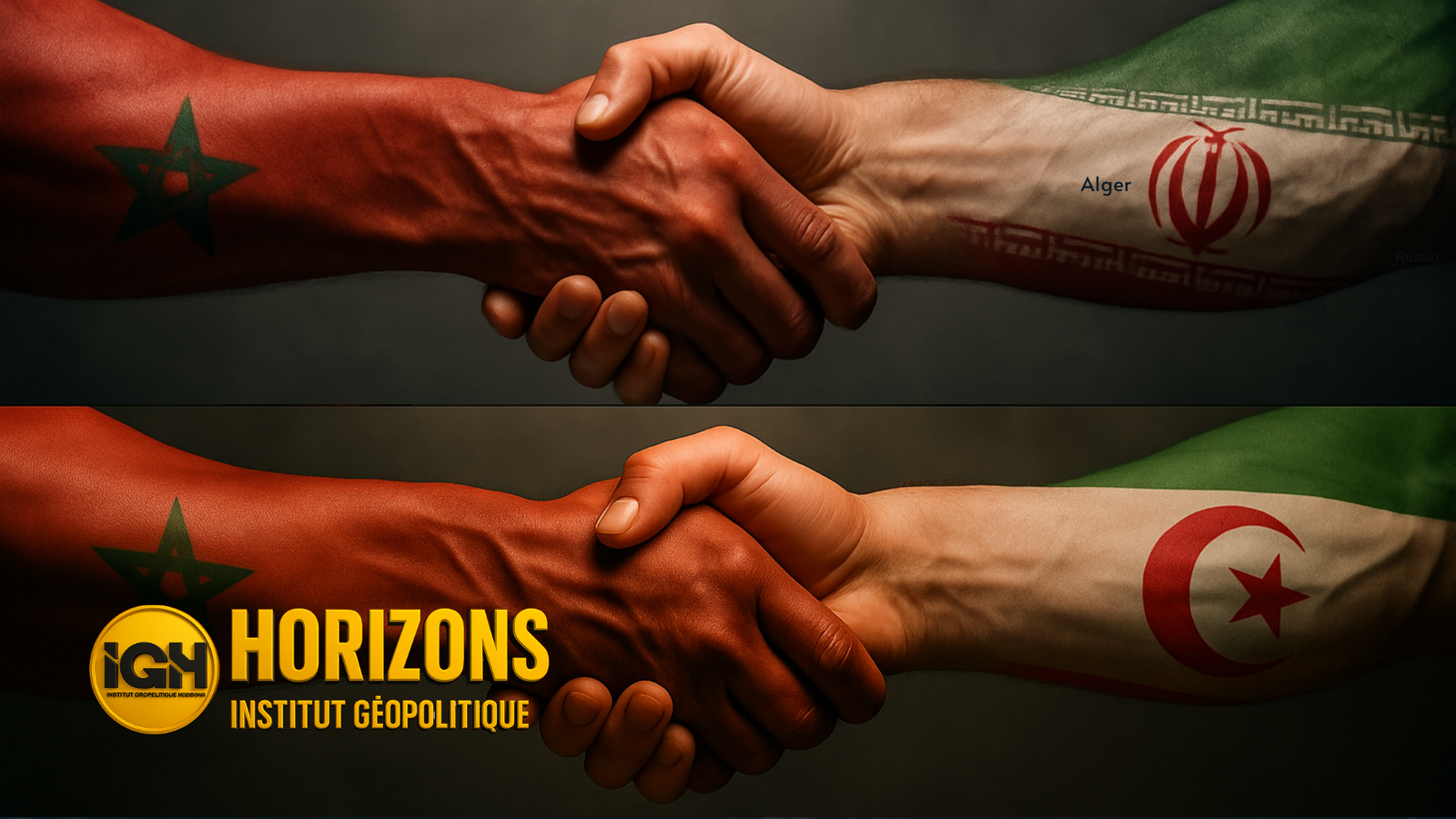
Simultaneous restoration works observed at the Algerian embassy in Rabat, the Moroccan embassy in Algiers, and the Iranian embassy in Rabat coincide with informal diplomatic negotiations between these capitals. These architectural signals accompany a discrete thawing process, particularly between Morocco and Algeria, as well as between Morocco and Iran, within the context of major regional geopolitical reconfigurations.
Introduction
The simultaneous observation of restoration works in several Maghrebi diplomatic representations constitutes a significant geopolitical signal. These renovation activities, reported by Moroccan media sources regarding the Algerian embassy¹ and confirmed by our diplomatic sources for the Moroccan embassy in Algiers and the Iranian embassy in Rabat, occur within a context of informal negotiations between these countries.
This synchronization is not coincidental. It comes after three years of total diplomatic rupture between Algiers and Rabat since August 2021², and six years of interrupted Moroccan-Iranian relations since May 2018³. Analyzing these signals requires a cautious approach, considering the underlying geostrategic stakes.
Converging Diplomatic Signals
The observed restoration works are accompanied by discrete diplomatic initiatives. Regarding Moroccan-Algerian relations, our sources confirm the existence of informal explorations aimed at resuming dialogue. These contacts, conducted through unofficial channels, seek to identify the conditions for progressive normalization.
⚠️ Geopolitical Alert
Moroccan-Iranian negotiations have crossed a qualitative threshold with the organization of at least two rounds of discussions, the latest conducted without the presence of Saudi and Emirati mediators initially involved.
This evolution in the format of Moroccan-Iranian discussions suggests notable progress toward direct dialogue. As a reminder, IGH exclusively revealed in November 2024 the discrete visit to Rabat of a high-ranking Iranian security official, accompanied by two mediators, one Saudi and one Emirati⁴. Iran, confronted with growing regional isolation and renewed American pressure under the Trump administration, demonstrates unprecedented diplomatic pragmatism.
Underlying Geostrategic Dynamics
The potential thaw between Morocco and Algeria occurs within a context of Sahelian equilibrium recomposition. Mali’s denunciation of the Algiers Agreement in January 2024⁵ has weakened Algeria’s position as regional mediator, while Morocco’s Atlantic access initiative for Sahelian countries reinforces Rabat’s influence.
For Iran, the opening toward Morocco responds to a logic of diplomatic diversification facing the failures of its proxy war strategy in the Middle East. Hezbollah’s decline and the weakening of the resistance axis compel Tehran to explore new avenues for regional normalization⁶.
💡 Analytical Recommendation
The synchronization of these restoration works with informal negotiations indicates strategic coordination. These signals likely prepare public opinion for potential major diplomatic announcements.
Constraints and Limitations
Obstacles to complete normalization remain substantial. The Western Sahara question remains the Gordian knot of Moroccan-Algerian relations, with Algiers maintaining its support for Polisario despite regional developments. For Moroccan-Iranian relations, Morocco’s condition of halting Iranian support for the separatist movement via Hezbollah has not been publicly satisfied⁸.
Internal pressures also constitute a limiting factor. In Algeria, the security establishment might oppose any rapprochement perceived as capitulation to Morocco. In Iran, regime hawks view normalization with Morocco as abandoning the « just causes » defended by the Islamic Republic.
Strategic Conclusion
The observed signals reveal an ongoing diplomatic reconfiguration in the Maghrebi space. Although cautious and gradual, this evolution demonstrates pragmatic adaptation to new regional geopolitical realities. Morocco, strengthened by recent diplomatic successes, particularly American recognition of its sovereignty over the Sahara, negotiates from a position of strength.
These developments follow a logic of controlled de-escalation, where each party tests the flexibility limits of the other without compromising fundamental interests. The outcome will largely depend on the actors’ capacity to transcend historical antagonisms in favor of a shared regional vision.
IGH Methodological Note
This analysis relies on high-level anonymous diplomatic sources, in accordance with journalistic standards. Information has been cross-referenced with verifiable media sources and recognized expert analyses. The sensitive nature of ongoing negotiations justifies the use of confidential sources.