Abdelhakim Yamani
Geopolitical Institute Horizons
April 27, 2025
Summary
Recent developments in the Western Sahara conflict call for a lucid reassessment of the actors involved, particularly the Polisario Front, whose fundamental nature deserves rigorous examination today. The incidents that occurred in the Tindouf camps over the past few months provide a window of clarity into this organization and its historical trajectory. An objective analysis of documented facts reveals a considerable gap between the claimed image of a liberation movement and the methods employed since its creation.
A Genesis Marked by Kidnappings
A careful examination of the Polisario Front’s early years reveals the systematic use of questionable methods. In the regions of Tan Tan, Sidi Ifni, and Smara, civilian disappearances were regularly reported in the early 1970s, establishing a concerning modus operandi from the very beginning of this movement.
The Zouerate episode in May 1977 constitutes a particularly revealing case study. This operation against a Mauritanian mining town resulted in the death of two French citizens, several injured, and the kidnapping of six French nationals. The severity of this incident necessitated a French military intervention to ensure the protection of its nationals – an exceptional response that testifies to the nature of this action.
The phenomenon was not limited to open conflict zones. As reported by Le Matin in 2010, testimonies have documented disappearances within the refugee camps themselves, leading to repeated calls for an independent international investigation into these troubling allegations.
The Sea as a Theater of Operations
The period following the signing of the first fishing agreement between Morocco and Spain in February 1977 saw the emergence of a particularly concerning maritime strategy. Spanish press archives document a series of incidents targeting civilian fishing vessels in regional waters.
The daily newspaper ABC, in its December 12, 1978 edition, devoted its front page to one of these attacks, formally associating the Polisario Front with these maritime operations. Other newspapers such as La Provincia also covered these events, which deeply marked Spanish public opinion at the time.
The attack on the vessel Los Palomares in July 1978 illustrates with particular clarity the instrumentalization of these actions for political purposes. The negotiations that followed for the release of those captured during this operation directly preceded a significant change in Madrid’s diplomatic posture. This chronological sequence deserves to be highlighted to understand the mechanisms of acquiring political legitimacy that characterized this period.
Camp Governance in Question
Testimonies about life in the camps under Polisario control raise legitimate questions about the governance practices applied there. In March 2022, Yabiladi reported an unusual demonstration in Tindouf where residents protested against disappearances attributed to armed elements, demanding information about their relatives.
Moroccan public television SNRT News has collected accounts from former detainees describing concerning detention conditions. While the source of these testimonies naturally demands methodological caution, their regularity and internal consistency nevertheless merit the attention of independent observers.
The persistent absence of permanent international observers in these camps, despite repeated requests from several human rights organizations, unfortunately does not allow for systematic verification of these serious allegations.
The 2011 Incident and Its Implications
The kidnapping of three European aid workers on October 23, 2011, in the Rabouni area revealed significant security vulnerabilities and troubling questions. France 24 reported at the time that « the Polisario accuses AQIM of kidnapping three Europeans in a Sahrawi camp in Algeria, » highlighting the complexity of the situation.
This operation, claimed by the group « Unity and Jihad in West Africa, » showed how one of the supposedly most secure camps could be infiltrated by external elements with precise knowledge of the location – suggesting either internal complicity or concerning porosity in security arrangements.
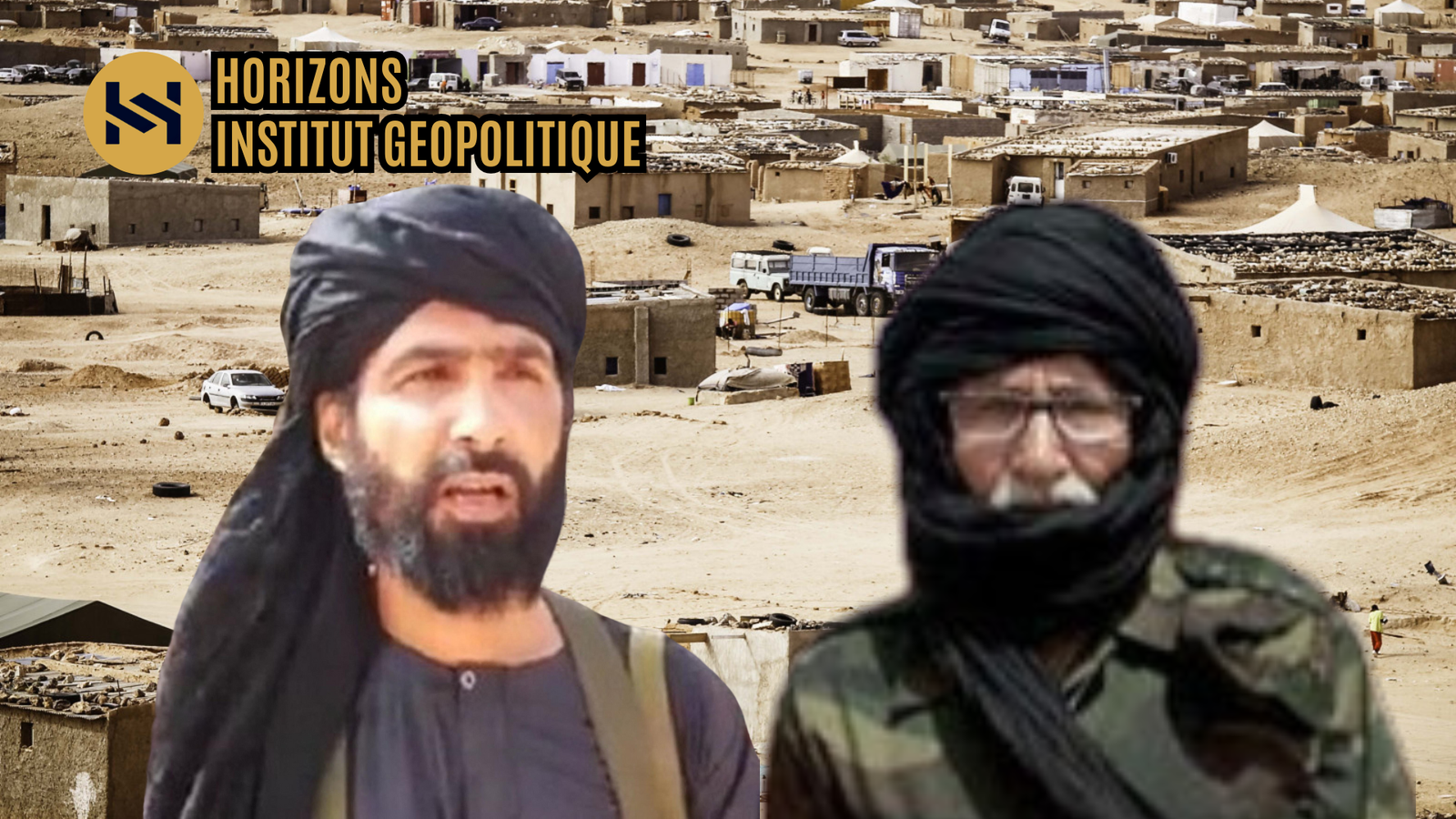
The path of Adnan Abu Walid al-Sahrawi also illustrates the gray areas that exist in the ecosystem of Sahelian armed movements. His evolution from involvement in the Sahrawi movement to a leadership position within the Islamic State in the Greater Sahara (ISGS) raises legitimate questions about potential bridges between different organizations operating in this region.
The European Strategic Intelligence and Security Center (ESISC) produced an in-depth analysis entitled « The Polisario Front and the Development of Terrorism in the Sahel » which examines these complex dynamics without excessive simplification.
A Necessary Reassessment in a Changing Context
The current geopolitics of the Sahel requires a revision of paradigms inherited from the Cold War. Professor Lahcen Haddad recently opened the debate on Twitter regarding the criteria that could justify a reclassification of the Polisario, inviting deep reflection on this issue.
At the international level, positions are evolving significantly. U.S. Representative Joe Wilson announced a legislative initiative concerning the situation in Western Sahara, while Secretary of State Marco Rubio expressed his support for the Moroccan autonomy plan as a viable solution to the conflict.
The analyses produced by Zineb Riboua for the Hudson Institute provide relevant insight into the regional security implications of this persistent conflict. Her work highlights how armed movements in this area are part of broader dynamics of regional destabilization.
For a Coherent Approach to Security Challenges
The objective examination of the Polisario Front’s historical trajectory reveals a fundamental contradiction between the discourse of political legitimation and the methods employed on the ground. This dissonance deserves to be recognized by international observers.
The concept of « historical responsibility » invoked by certain actors to justify their position on this issue should be reassessed in light of documented facts, including the violent actions and questionable methods that have marked this organization’s history.
This reassessment takes place in a particularly concerning Sahelian context. The region is experiencing an alarming deterioration of its security situation, with the proliferation of armed groups and the intensification of illicit trafficking. A coherent approach to all factors of regional instability imposes itself as a strategic necessity.
The Atlantic Council, in its recent analyses, emphasizes the growing geostrategic importance of Western Sahara, particularly regarding counterterrorism and resource security issues. This evolution in the perspective on this conflict reflects the progressive awareness of its implications for international stability.
Conclusion
Rigorous analysis of the historical facts concerning the Polisario Front establishes a finding that is difficult to dispute: this organization built its international legitimacy on methods and actions that would be universally condemned today. This fundamental paradox can no longer be ignored.
Recent incidents in the Tindouf camps confirm the persistence of problematic practices and reveal the internal erosion of an organization whose political project seems to have reached its historical limits. The time has come to objectively reconsider its status and role in the regional landscape.
It is time for the International Community to face what it has chosen to ignore for too long, among other reasons, for bipolar geopolitical considerations: the Polisario entered history through the door of terrorism and kidnappings. It is through this same door that it must exit.