A Revealing Temporal Coincidence
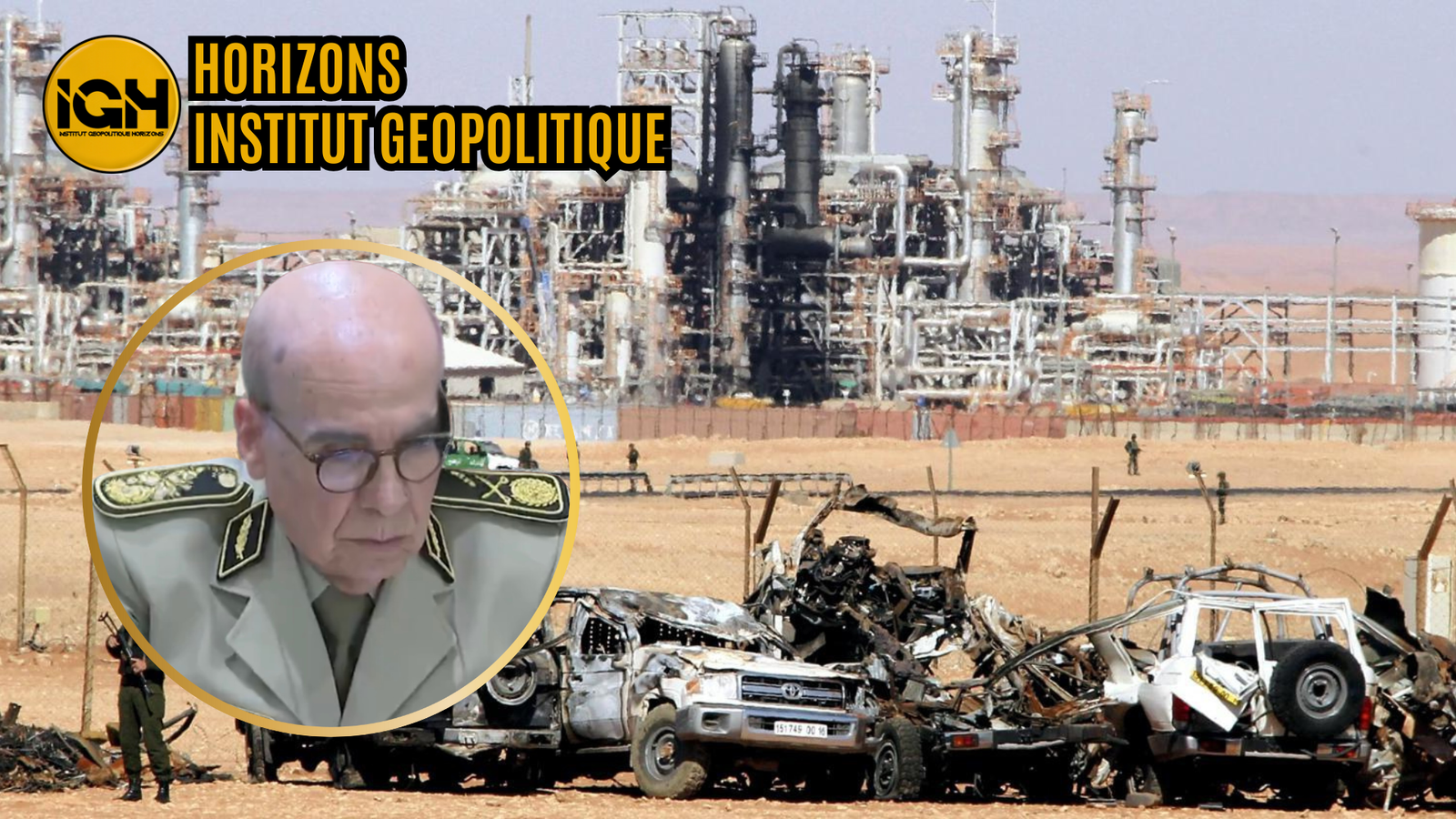
On May 22, 2025, President Abdelmadjid Tebboune appointed General Abdelkader Aït Ouarabi, alias « General Hassan, » as director general of internal security (DGSI). Three days later, on May 25, the long-awaited trial of the Tiguentourine terrorist attack opened. This temporal proximity is not insignificant in a case that cost the lives of 38 hostages in one of the deadliest hostage situations in recent history.
From January 16-19, 2013, a commando of 40 jihadists took hostage approximately 800 employees of the gas complex, including 134 foreigners of 26 nationalities. The assault by Algerian special forces resulted in a massacre: 38 hostages killed (Japanese, French, Americans, British, Norwegians, Filipinos, Canadians, Malaysians), many executed with a bullet to the head or riddled with bullets. Victims’ families, such as that of Frenchman Yann Desjeux (9 Kalashnikov impacts), never knew whether their loved ones were killed by terrorists or during the military intervention.
General Hassan was directing the Operational Coordination and Anti-Terrorism Intelligence Service (Scorat) in January 2013, directly involved in managing the In Amenas crisis. His return to security responsibilities at the time of the trial reveals the clan logics that govern strategic appointments in the Algerian politico-military system.
The Paradox of Rehabilitation
General Hassan’s trajectory illustrates the ambiguities of the Algerian security system. Accused in 2015 of « armed group creation » and manipulation of terrorist commandos, he was tried by a military tribunal and sentenced to five years in prison. His current appointment suggests complete rehabilitation, despite persistent gray areas about his role in the In Amenas affair.
General Hassan is none other than the brother-in-law of General Mohammed Mediène, alias « General Toufik, » powerful head of the DRS until 2015. The latter, sentenced to prison just after the Hirak before being « cleared, » perfectly illustrates the cycles of disgrace and rehabilitation that characterize clan struggles at the top of the Algerian state.
According to several concordant sources, members of the Tiguentourine commando were allegedly released and armed by General Hassan’s services. This presumed instrumentalization of terrorist groups fits into a « secret war » logic where boundaries between state and non-state actors blur.
Institutionalized Gray Areas
A Trial of Strategic Absentees
The opening trial judges only four defendants, while the real masterminds have disappeared. Mokhtar Belmokhtar, the operation’s mastermind, officially died in November 2016 during a strike in Libya. As for « Hamel, » the other key figure sought according to judicial sources – whose precise identity and exact role in coordinating the attack remain unclear – he remains untraceable. This selective justice reveals a recurring pattern of the Algerian system.
The absence of Belmokhtar (officially dead in 2016) and « Hamel » – this mysterious « key element » according to judicial authorities whose precise role remains unknown – from the trial, combined with El Para’s case (detained but never tried), reveals strategic management of justice by the politico-military system. Some deaths are convenient, some silences protect, some trials will never happen.
The Question of Responsibilities in the Massacre
The Tiguentourine attack reveals security dysfunctions that go beyond simple negligence. The operation’s sophistication – precise site knowledge, nominal hostage lists, coordinated timing – suggests a disturbing level of internal information.
The Algerian military assault, conducted without prior negotiation and with disproportionate means (attack helicopters, tanks), transformed a hostage situation into a slaughter. Autopsies reveal that many hostages died riddled with bullets, without it being possible to determine the origin of the fatal shots. This brutal method questions the real priorities: saving the hostages or protecting the gas site?
The site, described as a « sieve » by witnesses, was nevertheless protected by a British private company and Algerian forces. This security failure raises the question of possible complicity or deliberate instrumentalization of the terrorist threat.
Clan Struggles and Power Redistribution
Clan Management of Memory
Thirteen years after the facts, the opening of this trial coincides with General Hassan’s rehabilitation. This synchronization reveals less a desire for justice than a redistribution of cards within the politico-military system. In a context where President Tebboune suffers from a manifest legitimacy deficit, security appointments become crucial political signals.
The In Amenas trial does not aim to reveal the truth but to validate an official version that preserves the system’s internal balances. General Hassan’s rehabilitation fits into this logic of narrative control serving clan power relations.
Impact on International Relations
The In Amenas affair has durably affected international partners’ confidence in Algerian security capabilities. The current trial aims to restore this credibility by demonstrating a will for transparency, even if factitious.
However, General Hassan’s simultaneous appointment sends a contradictory signal to Western chancelleries, who know his file perfectly well. This dissonance reveals the Algerian politico-military system’s inability to articulate internal coherence and diplomatic requirements, symptom of a power lacking both internal and external legitimacy.
Strategic Implications and Prospects
Perpetuation of an Opaque System
General Hassan’s return confirms the resilience of informal « DRS system » networks despite its official dissolution in 2016. Personal loyalties, inherited complicities, and opaque practices survive cosmetic reforms, revealing the impossible modernization of a fundamentally clan-based system.
Challenges of a System in Legitimacy Crisis
The In Amenas trial tests less Algeria’s capacity to render justice than the politico-military system’s ability to maintain its internal coherence facing external pressures. In a context of chronic legitimacy deficit of the current power, each judicial decision becomes a political survival issue.
Victims’ families, notably French, Japanese, and Canadian, are closely observing this trial. Thirteen years after losing their loved ones in atrocious circumstances – many executed with a bullet to the head or riddled with bullets without knowing by whom – they finally hope for answers. Their satisfaction or disappointment will durably influence bilateral relations and Algeria’s international image.
Strategic Conclusion
The In Amenas trial reveals the structural contradictions of an opaque politico-military system confronted with international transparency requirements. By rehabilitating General Hassan while organizing a facade trial, the Algerian power illustrates its inability to overcome clan logics inherited from the « black decade. »
The central issue is no longer knowing whether this trial will reveal the truth about In Amenas, but understanding how a system in chronic legitimacy crisis uses justice as an instrument for managing internal balances. This instrumentalization, embodied by General Hassan’s trajectory, will continue to define Algerian governance as long as the politico-military complex’s hegemony persists.
© 2025 Horizons Geopolitical Institute – Do not reproduce without authorization