Strategic Guidance Note
September 5, 2025
Executive Summary
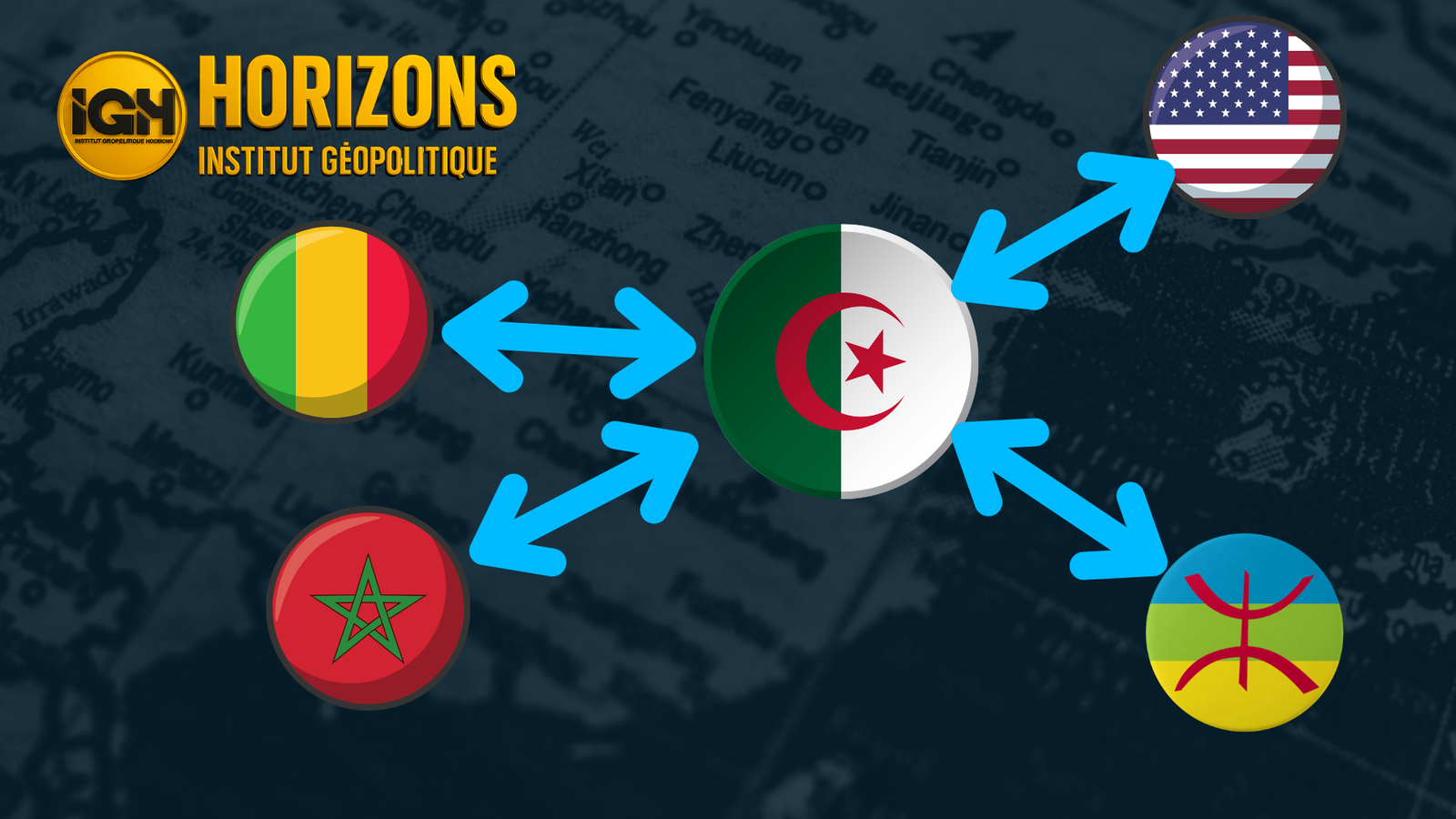
Algeria is navigating a multidimensional diplomatic crisis marked by three near-simultaneous breakdowns with the United States, Morocco, and the Alliance of Sahel States (AES). The halt of American mediation, signaled by the reassignment of Joshua Harris to Baghdad, reveals Washington’s exasperation with Algerian delaying tactics. This unprecedented configuration is triggering a major geopolitical realignment: consolidation of Moroccan positions on Western Sahara, intensification of contacts between the Kabyle movement and several Western and Arab chancelleries, and a strategic rupture with the AES following the April 2025 drone incident. The analysis reveals a systemic rather than circumstantial isolation, with long-term implications for the Maghreb-Sahel security architecture.
Introduction
The geopolitical landscape of the Maghreb and Sahel is undergoing a structural transformation in September 2025, catalyzed by Algeria’s growing diplomatic isolation. Three ruptures occurring within a remarkably short period—approximately three weeks between August and September 2025—outline the contours of a strategic realignment with continental implications.
This analysis, based on verifiable factual elements and direct diplomatic sources, examines the mechanisms of this triple rupture and its systemic implications. The simultaneity of these crises, far from being coincidental, reveals the limits of an Algerian strategy of stalling that has backfired on its architects.
I. The End of American Mediation: Causes and Consequences
⚠️ Alert Point: American Mediation
Washington reportedly ended its mediation efforts between Algiers and Rabat approximately three weeks ago, according to corroborating sources. This breakdown, if confirmed, is explained by what observers qualify as « delaying tactics » by the Algerian side, aimed at buying time to avoid potential sanctions while attempting to reactivate other diplomatic channels, notably with France.
The most tangible indicator of this shift in American attitude lies in the recent appointment of Joshua Harris as Chargé d’Affaires in Baghdad. Harris, who had been in charge of the Algerian and Western Sahara files at the State Department since at least 2023, embodied the American mediation effort. His reassignment to Iraq constitutes an explicit diplomatic signal of disengagement from the Algerian-Moroccan issue.
The delaying strategies attributed to Algeria aimed, according to available analyses, for a dual objective: to stall against American pressures while exploring diplomatic alternatives. This fragmented approach appears to have eroded the patience and trust of the American mediators, transforming benevolent neutrality into what could become active hostility.
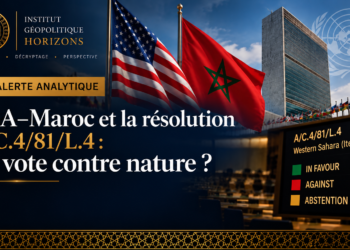
At the UN level, diplomatic sources mention the possibility of transforming MINURSO into MANSASO during the next Security Council meeting in October 2025. This evolution, if realized with the support of the United States as pen-holder and four non-permanent members, would consecrate a fundamental change in the international approach to the Western Sahara issue.
Concurrently, the State Department is reported to have intensified its contacts with representatives of the Movement for the Self-Determination of Kabylia (MAK) and the Provisional Kabyle Government in exile (ANAVAD). This development, if confirmed, would mark a turning point in the American approach to the Kabyle question, now potentially perceived as a pressure lever on Algiers.
II. The Moroccan-Algerian Impasse and the Territorial Question
Bilateral negotiations between Morocco and Algeria, which seemed to be progressing towards normalization symbolized by plans to refurbish embassies, reportedly hit a major obstacle concerning territorial delimitation. According to unofficially confirmed information, Algeria initially accepted the American proposal to exclude the border issue from negotiations, notably concerning the Eastern Sahara historically claimed by Morocco.
However, a tactical reversal allegedly occurred, with Algiers ultimately demanding an official Moroccan renunciation of these territories. If this information is accurate, it reveals a strategy of maintaining a conflictual status quo rather than a sincere search for normalization. The Eastern Sahara, incorporated into Algeria during the French colonial period, remains a sensitive historical issue for Morocco.
For Morocco, maintaining the status quo paradoxically presents several identifiable strategic advantages. It perpetuates Algeria’s geopolitical isolation and reinforces the regional containment apparatus. Normalization would have mechanically led to a resumption of trade, potentially relieving an Algerian economy facing supply difficulties in several sectors.
The status quo also allows Morocco to retain the temporal initiative on a potential territorial claim concerning its eastern provinces, thus maintaining a form of latent diplomatic pressure. Algerian intransigence on the Western Sahara dossier, in an international context evolving towards increased recognition of the Moroccan position, is contributing, according to several observers, to weakening the legitimacy of the Algerian politico-military system.
III. The Rupture with the AES: Sahelian Isolation
IGH Note: The Crisis with the Alliance of Sahel States
The April 2025 Malian drone incident precipitated a major diplomatic rupture between Algeria and the three AES countries. The collective recall of ambassadors, the closure of Algerian airspace to Mali, and mutual accusations mark an unprecedented deterioration. The temporal coincidence between the filing of the Malian complaint and President Tebboune’s address at the IATF suggests a coordinated action aimed at thwarting Algeria’s African ambitions.
The crisis between Algeria and the Alliance of Sahel States constitutes the most visible manifestation of Algiers’ regional isolation. The downing of a Malian drone by the Algerian army in April 2025 triggered a diplomatic spiral that transformed a border incident into a strategic rupture1.
The versions differ radically: Algeria maintains the legitimacy of its action in response to an airspace violation, while the AES countries denounce an aggression and level accusations of collusion with armed groups2. The collective recall of AES ambassadors, followed by reciprocal Algerian measures including the closure of airspace to Mali, illustrates the depth of the rupture.
The most significant element lies in the timing of the official complaint filed by Mali against Algeria. Its coincidence with the Algerian presidential address at the IATF (Intra-African Trade Fair 2025) appears hardly fortuitous. Precisely when President Tebboune was outlining a strategy to revive Algerian influence in sub-Saharan Africa, Mali confronted him with a brutal geopolitical reality. This synchronization suggests diplomatic coordination aimed at publicly undermining Algeria’s continental ambitions3.
This rupture deprives Algeria of its traditional Sahelian « strategic depth, » a central concept of its geopolitical doctrine since independence4. The exclusion of Algeria from regional security dynamics considerably weakens its capacity to influence critical cross-border issues: terrorism, illicit trafficking, and migratory flows. The objective beneficiary of this configuration remains Morocco, which now appears as a more reliable partner for the Sahelian states5.
IV. Emergence of New Actors: Kabylia and Gulf Powers
💡 Focus: The Kabyle Question
Kabylia has historically constituted autonomous political entities, notably the Kingdom of Koukou, before the Ottoman and then French conquests. This historical precedence fuels the contemporary claims of the MAK and ANAVAD. A Unilateral Declaration of Independence of Kabylia (UDIK) is reportedly being considered for December 2025, with the possibility of being brought forward depending on the evolution of the geopolitical context.
The presumed breakdown of American mediation is reported to have catalyzed a new dynamic concerning the Kabyle question. According to sources close to the independence movement, contacts with the US State Department intensified in recent weeks, after a period described as « lethargic. » This resumption coincides temporally with the change in American attitude towards Algiers.
Kabyle leaders claim to be in « more or less advanced discussions » with several chancelleries. Besides the United States, contacts are reportedly established with the British Foreign Office, « at the presidential level » with France, and with « certain Gulf countries including the United Arab Emirates. » This diversification of interlocutors, if confirmed, would mark a qualitative evolution in Kabyle diplomacy.
Regarding specifically the United Arab Emirates, exchanges initiated in March 2025 reportedly resumed with intensity after a period of calm. Kabyle diplomatic sources mention an imminent transition to an « operational » phase, a term suggesting support beyond the purely political framework. This potential Emirati involvement would fit into Abu Dhabi’s broader strategy of projecting influence in the Western Mediterranean.
The prospect of a UDIK for December 2025, with the possibility of anticipation « if a favorable geopolitical context presents itself earlier, » according to the reported terms of a senior Kabyle leader, introduces an additional variable of instability. The gradual internationalization of this issue transforms its nature: from an internal Algerian matter, it is evolving into a dossier involving major international actors.
Strategic Conclusion
The geopolitical configuration of September 2025 reveals an Algeria facing multidimensional isolation whose drivers exceed usual diplomatic contingencies. The stalling strategy, effective for decades in navigating regional antagonisms, seems to have reached its structural limits.
The accumulation of near-simultaneous ruptures—American, Moroccan, Sahelian—combined with the potential activation of the Kabyle question, paints a picture of strategic encirclement. This configuration mechanically produces a realignment of regional balances: consolidation of Moroccan positions, autonomization of the AES, and emergence of new influential actors.
Algeria certainly possesses residual assets—energy resources, military apparatus, territorial depth—but their effective mobilization would require a doctrinal revision that the current system seems structurally incapable of operating. The institutional and ideological rigidity of the Algerian power significantly limits its margins of adaptation in the face of a regional environment undergoing accelerated mutation.
Medium-Term Scenario Hypotheses
Scenario 1 – Controlled Escalation
Algeria maintains its posture of intransigence, betting on its resilience capacity and energy resources. The UDIK is proclaimed with limited but symbolically significant recognitions. Tensions increase on multiple fronts without crossing the threshold of direct military confrontation. The Algerian system undergoes a progressive erosion of its internal and external legitimacy without immediate collapse.
Scenario 2 – Pragmatic De-escalation
A pragmatic faction within the Algerian power imposes a change of course in the face of accumulating pressures. Resumption of negotiations with Morocco on realistic bases temporarily excluding the most sensitive territorial issues. African mediation to ease tensions with the AES. Renewed dialogue with Washington including guarantees on the Kabyle question. This option requires substantial concessions difficult for the current system to assume.
Scenario 3 – Systemic Crisis
The conjunction of external pressures and internal fragilities provokes a major crisis of the system. Social unrest linked to economic difficulties amplified by isolation. Coordinated activation of the Kabyle claim with substantial international support. Increased tensions at the borders. This scenario could impose a profound reconfiguration of the Algerian political system under combined internal and external pressure.
Strategic Recommendations and Anticipated Reactions
Regional state actors are confronted with the necessity of managing a weakened Algeria without provoking a destabilizing collapse. Maintaining discreet communication channels, despite official tensions, appears indispensable to prevent uncontrolled escalations. Morocco, the apparent main beneficiary of the situation, will likely have to moderate its diplomatic gains to avoid pushing Algiers towards unpredictable reactions. The AES states, while affirming their regained autonomy, might eventually seek a form of calibrated appeasement, aware that a totally destabilized Algeria would create a security vacuum detrimental to all.
International institutions, particularly the African Union and the Arab League, find themselves in a delicate position. Their premature intervention risked being perceived as partial, but their wait-and-see approach could let the situation degenerate. These organizations will likely develop informal mediation mechanisms, quickly activatable in case of critical deterioration. The United Nations, via their specialized agencies, are already anticipating the potential humanitarian implications of an Algerian crisis, notably in terms of migratory flows and regional food security.
International economic actors, particularly in the energy sector, are accelerating their supply diversification while maintaining a minimal presence in Algeria. This hedging strategy aims to preserve future options while limiting exposure to risks. European companies, historically present, are reevaluating their investments in light of potential prolonged instability. Asian operators, notably Chinese, could seize these repositioning opportunities, accepting higher risk levels in exchange for privileged access to resources.
The evolution of the Kabyle question will constitute a major test for international diplomacy. The involved powers will need to calibrate their support to maintain sufficient pressure on Algiers without triggering an uncontrolled fragmentation of Algerian territory. The UAE, new entrants in this equation, will probably provide graded support, conditioned on the evolution of the regional context and their broader strategic interests in the Mediterranean.
Notes:
1 « The diplomatic crisis between Algeria and the AES calls for urgent mediation », Institute for Security Studies, 2025.
2 « Diplomatic crisis between Algeria and the three countries of the Alliance of Sahel States », Agenzia Fides, April 2025.
3 « Rivalries in the Maghreb: the Sahel epicenter of challenges », La Nouvelle Tribune, 2025.
4 « Algeria and the Sahel States: a strategic depth in rupture », Quid.ma, 2025.
5 « Breakdown between Algiers and the AES countries », Deutsche Welle, 2025.
© Geopolitical Horizons Institute (GHI) – September 2025
Reference Document: GHI-NS-Maghreb-20250905