Prospective Geopolitical Analysis
Institut Géopolitique Horizons
Abdelhakim Yamani
May 2025
🔴 EXECUTIVE SUMMARY
Algeria under Abdelmadjid Tebboune is experiencing a multidimensional systemic crisis that threatens its territorial integrity and survival as a unitary state. Five converging indicators signal a historic geopolitical shift: strategic encirclement orchestrated by the United Arab Emirates in the Sahel, border militarization by Mauritania, the prospect of classifying Polisario as a terrorist organization, Emirati negotiations with the Kabyle movement MAK, and persistent rumors about Tebboune’s inability to complete his mandate.
This convergence of internal and external factors actualizes the Arabic adage « كل ما بني على باطل فهو باطل » (what is built on falsehood is false): Algeria, a French construction made up of territories amputated from its neighbors, faces an existential challenge to its colonial-inherited borders. The most likely scenario outlines a gradual territorial reconfiguration to the detriment of current Algeria, within a context of regional geopolitical recomposition orchestrated by a UAE-Morocco-Sahel states coalition.
Introduction: Anatomy of a Foretold Decline
On May 24, 2025, Algeria finds itself confronted with an unprecedented conjunction of existential threats that question its sustainability within its current borders. Beyond the visible symptoms of a regime in crisis – Tebboune’s re-election with 94.65% of votes but less than 24% participation, increased repression of the Hirak movement, broken diplomatic relations with almost all neighbors – deeper dynamics emerge that challenge the geopolitical architecture inherited from decolonization.
Intense working meetings took place in Rabat toward the end of the first half of May with a high-ranking State Department official who stayed secretly in Morocco for several days. While the Moroccan Sahara dossier was at the center of the work, other regional dossiers were treated in depth, suggesting a major strategic reconfiguration of American policy in the Maghreb-Sahel.
This information, cross-referenced with recent developments, reveals the emergence of a new international consensus around a regional geopolitical recomposition that systematically marginalizes Algeria. The geopolitical puzzle is beginning to assemble: Emirati encirclement to the South, Mauritanian militarization to the Southwest, probable classification of Polisario as a terrorist organization, and activation of the Kabyle dossier via negotiations with the MAK.
I. Strategic Encirclement: Geometry of Marginalization
The Emirati offensive is articulated around three converging axes:1. Massive economic diplomacy: The Emirates promise nearly $97 billion in investments in Africa, primarily targeting AES countries. In Mali, the extension of the 2019 defense protocol is accompanied by energy projects (Touna solar plant, 93 MW). In Niger, mining and energy investments aim to secure Emirati uranium supply. In Burkina Faso, agricultural and infrastructure agreements strengthen economic grip.
2. Military alliance with Haftar forces: Saddam Haftar’s visit to Niger, culminating in his official decoration, reveals the military dimension of containment. The concluded security agreements concern border control and the possible takeover of the former French base of Madama, a strategic installation on the Libyan-Nigerien border.
3. Energy war: Emirati financing of the Africa Atlantic Gas Pipeline (AAGP) connecting Nigeria to Morocco via the Atlantic sounds the death knell for the competing Algerian trans-Saharan gas pipeline project. This energy recomposition deprives Algeria of its natural outlets to West Africa.
Mauritania’s declaration of its Northeast border (Lbriga zone) with Algeria as a military zone forbidden to civilians constitutes a major diplomatic signal. This decision, officially justified by the fight against trafficking, is part of a logic of systematic isolation of Algeria by its neighbors.
To the North: Tensions with Spain and rupture with FranceTo the West: Total rupture with Morocco, creation of Moroccan military zones facing AlgeriaTo the Southwest: Militarization of the Mauritanian border (Lbriga zone)
To the South: Emirati control of AES and alliance with Libyan ANL threatening the strategic base of Madama
To the East: Marginalized influence in Libya facing the Turkish-Emirati coalition
The announcement by American congressman Joe Wilson of the possible classification of Polisario as a Foreign Terrorist Organization (FTO) would constitute a fatal blow to Algerian diplomacy. This reclassification, if materialized, would transform Algerian support for the separatist movement into support for a designated terrorist organization, with all the legal and financial consequences that ensue.
II. Anatomy of Internal Systemic Collapse
Tebboune’s re-election in September 2024 with 94.65% of votes but a participation rate below 24% reveals a dramatic legitimacy deficit. In Kabylia, the historic bastion of contestation, the participation rate fell below 1%, illustrating a de facto democratic secession. This disconnection between power and society creates a political vacuum exploitable by separatist movements and external interference.
Repression intensifies: dozens of arrests during the electoral campaign, imprisonment of activists, artists and lawyers under the pretext of terrorism apology. The new penal code of May 2024 criminalizes any criticism of security forces and national symbols, transforming Algeria into a police state.
The decree of June 6, 2024 reinforces military control over civilian affairs, placing justice, public enterprises and administration under direct military tutelage. This militarization is accompanied by internal purges: 155 senior officers are currently imprisoned in Blida military prison, an unprecedented record revealing the extent of fractures within the security establishment.
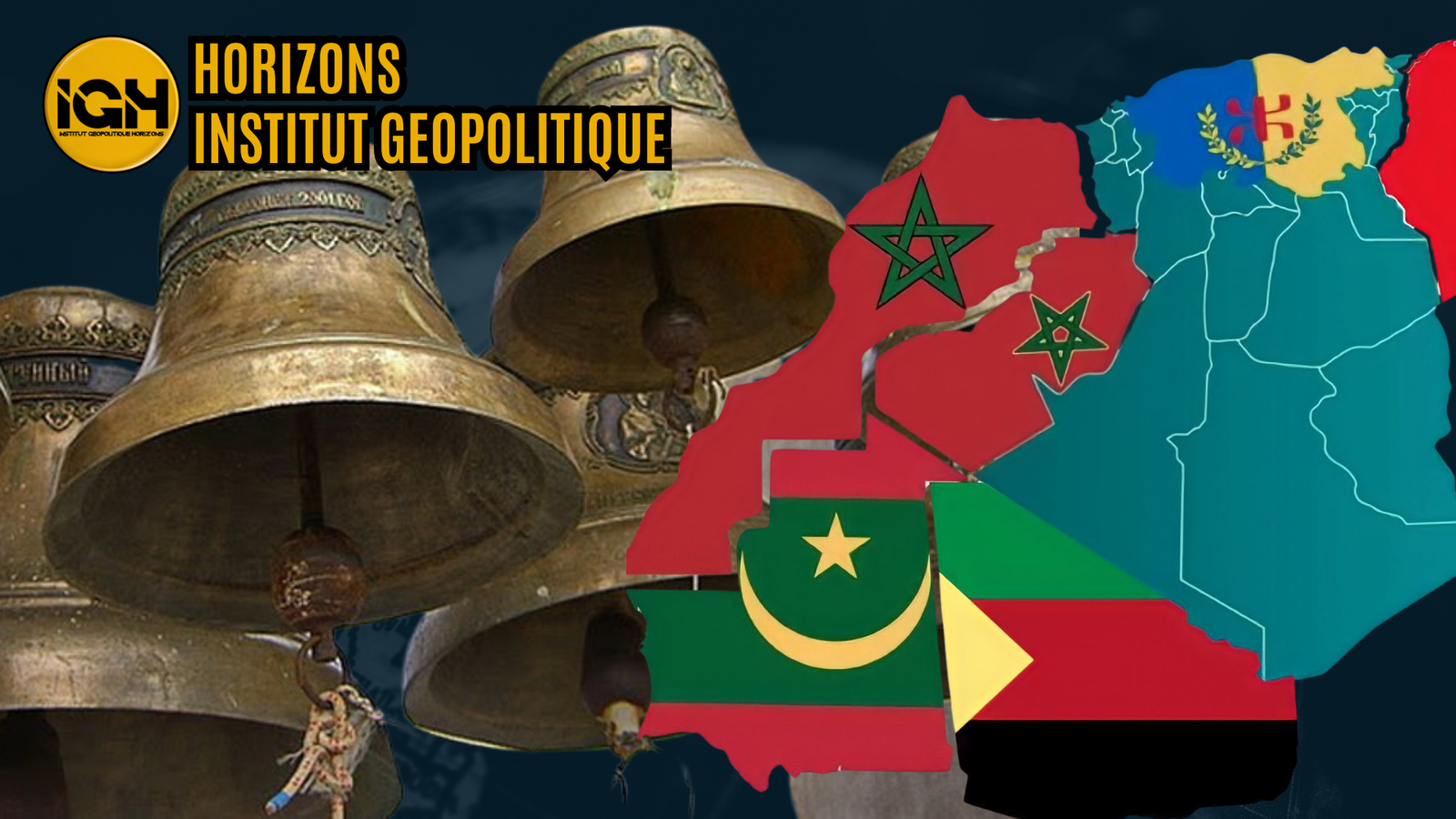
The reported negotiations between the United Arab Emirates and the Movement for the Self-Determination of Kabylia (MAK) constitute a direct existential threat. This instrumentalization of the Kabyle question by a hostile external power reproduces the classic pattern of territorial dismemberment: external support for a separatist movement in a context of central power weakness.
Kabylia, with its 6 million inhabitants and significant economic resources, represents 15% of the Algerian population concentrated on a strategic territory facing the Mediterranean. Its detachment from Algeria would constitute a major precedent for other autonomist claims. The electoral participation rate below 1% in September 2024 reveals a de facto democratic secession.
III. Prospective Scenarios: Toward Territorial Reconfiguration
The Arabic adage « كل ما بني على باطل فهو باطل » finds its full geopolitical significance here. Algeria, a French construction largely made up of territories amputated from neighboring countries (Morocco, Tunisia, Libya, Mali), faces a systemic challenge to its artificial borders. The fragmentation process would follow a geographical and ethnic logic: autonomization of Kabylia to the North, return of eastern territories to Tunisia and Libya, border readjustments in favor of Morocco and Mali.
• Succession crisis within the military system
• Escalation of tensions with AES leading to armed conflict
• Classification of Polisario as terrorist organization
• Popular uprising in Kabylia with international recognition
• Economic collapse with generalized riots
In this scenario, the accumulation of internal and external crises causes rapid collapse of the Algerian state, following the post-2011 Libyan model:• Loyalist forces concentrated in Algiers
• Autonomous Republic of Kabylia supported by the Emirates
• Regional military factions
• Terrorist groups taking advantage of chaos
• Multiple external interventions (Morocco, Tunisia, Mali, international powers)
IV. Regional Geopolitical Implications
The ongoing geopolitical recomposition outlines the contours of a new regional order articulated around three axes:1. The Morocco-AES Atlantic axis: The Moroccan royal initiative offering Atlantic Ocean access to landlocked Sahel countries, financially supported by the United Arab Emirates.
2. The Nigeria-Morocco energy axis: The AAGP gas pipeline bypassing Algeria and creating a new West African energy geography.
3. The Emirates-AES-Libya security axis: Military and security cooperation excluding Algeria from new Sahel balances.
The secret meetings in Rabat between American and Moroccan officials signal a strategic repositioning of Washington in the Maghreb. The Trump 2.0 administration, with its transactional policy, could accelerate Algeria’s marginalization in favor of a strengthened alliance with Morocco and Gulf monarchies.
V. Acceleration Factors and Warning Signals
Political: Persistent rumors about Tebboune’s inability to complete his mandate
Economic: Fall in foreign exchange reserves, growing budget deficit
Security: Multiplication of border incidents with all neighbors
Social: Resurgence of contestation in Kabylia, sectoral strikes
International: Growing diplomatic isolation, loss of regional influence
The analysis of converging dynamics reveals that Algeria is experiencing an unprecedented existential crisis since its independence. The conjunction of internal systemic collapse and external geopolitical encirclement creates the conditions for major territorial reconfiguration that actualizes the adage « كل ما بني على باطل فهو باطل ».
Probability of maintaining territorial status quo (0-5 years): 15%Probability of gradual fragmentation: 65%
Probability of systemic collapse: 20%
Most likely scenario: Progressive territorial fragmentation beginning with Kabyle autonomization (2025-2026), followed by border readjustments negotiated under international pressure (2027-2030). This process would occur within the framework of regional geopolitical recomposition orchestrated by the Emirates-Morocco-AES coalition.
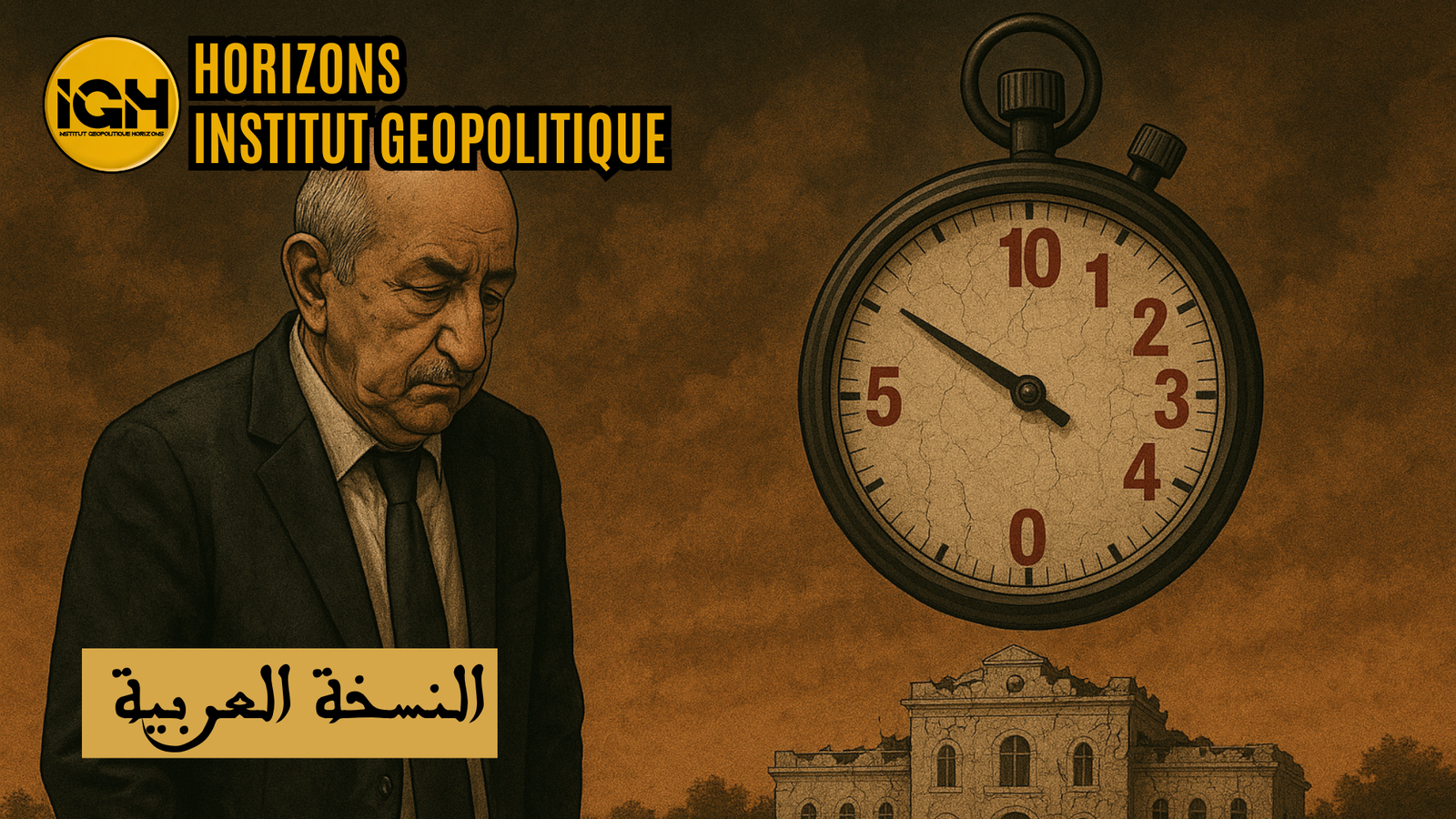
The « death knell » mentioned in the title of this analysis is not yet definitively ringing for Algeria, but the warning signs of a major historical transformation are now clearly perceptible. The window of opportunity for regime stabilization within its current borders is rapidly closing, facing fragmentation dynamics that seem to have acquired their own momentum.
This prospective is neither a wish nor a prophecy, but a rigorous analysis of the heavy trends shaping the geopolitical future of the Maghreb and Sahel. Algeria stands at a historical crossroads where the choices of the coming months will determine whether it will manage to overcome this multidimensional crisis or join the list of states that did not survive the geopolitical recompositions of the 21st century.