By Abdelhakim Yamani, Geopolitical Analyst – Geopolitical Institute Horizons
Executive Summary
The revelation by Mauritanian activist Ali Abi Taleb of American mediation for Morocco-Algeria normalization constitutes a diplomatic trial balloon aimed at testing reactions from the capitals concerned. Beyond the initial five-point version, our exclusive sources revealed, in addition to the five axes, eleven major American demands developed since the Harris mission of September 2023, constituting a strategy of systematic « bringing to heel » of the Algerian regime, in frontal confrontation with the ideological, diplomatic and military foundations on which Algeria has been built since its creation in 1962. This maximalist roadmap resembles more of a geopolitical ultimatum than balanced mediation, aiming for a complete overhaul of the Algerian state under Atlantic hegemony.
Introduction
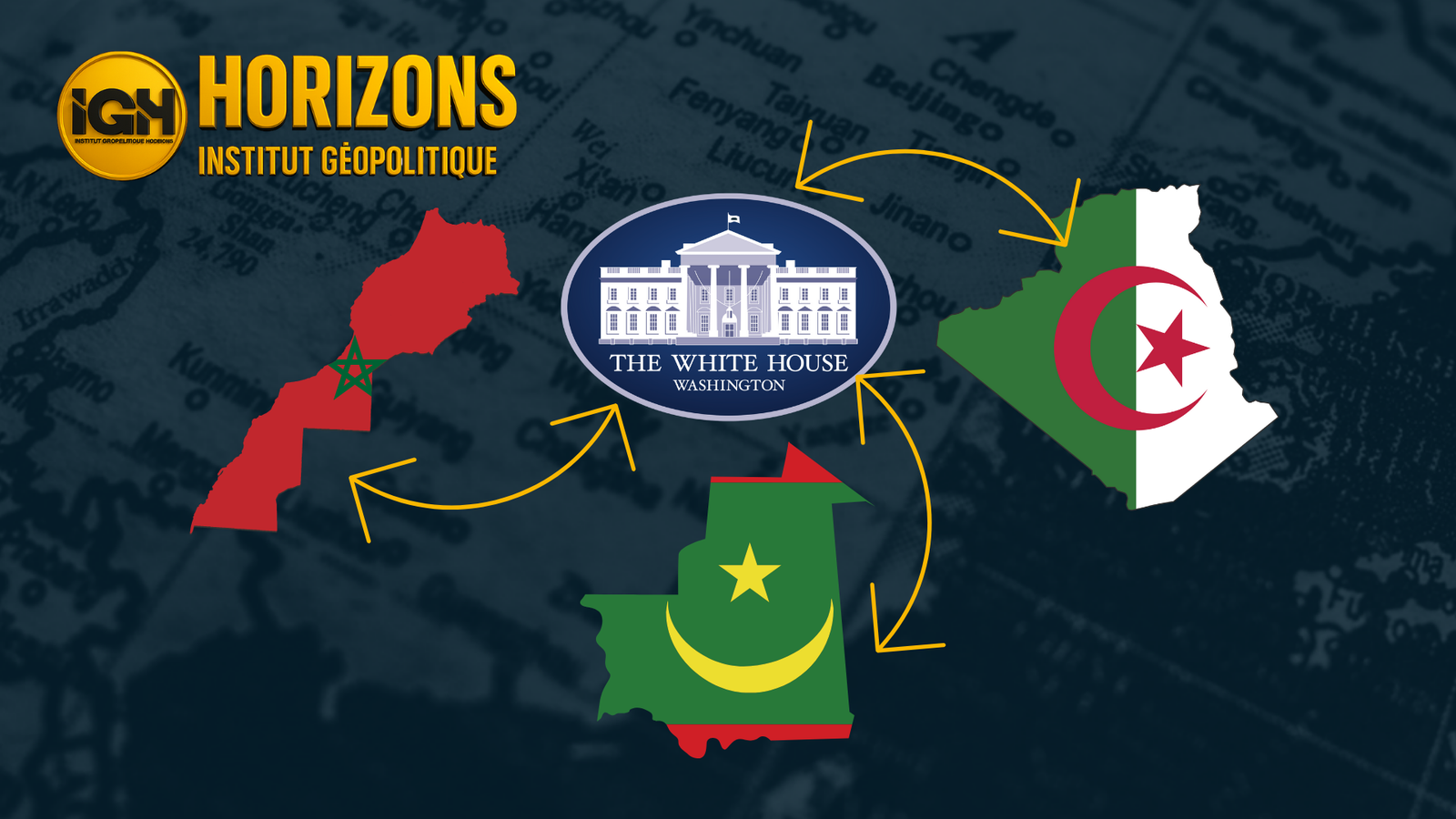
The emergence of information revealed by Mauritanian activist Ali Abi Taleb about American tripartite mediation involving Morocco-Algeria-Mauritania must be analyzed as a major diplomatic trial balloon. This revelation, whether emanating directly from American services, constituting a controlled leak by other parties, or reflecting informal consultations, clearly aims to test reactions from different capitals concerned and prepare regional public opinion for potential negotiations.
Beyond the initial five-point version widely circulated, our exclusive sources reveal eleven American demands developed during the Harris mission of September 2023, continued today under the supervision of Massad Boulos, President Trump’s special advisor for Africa and the Middle East. This mediation, initiated by Joshua Harris under the Biden administration, constitutes a systemic transformation strategy that goes far beyond the framework of bilateral reconciliation.
The five initial axes revealed by Ali Abi Taleb:
- Recognition by Algeria of Moroccan sovereignty over Western Sahara
- Algeria’s accession to the Atlantic Initiative
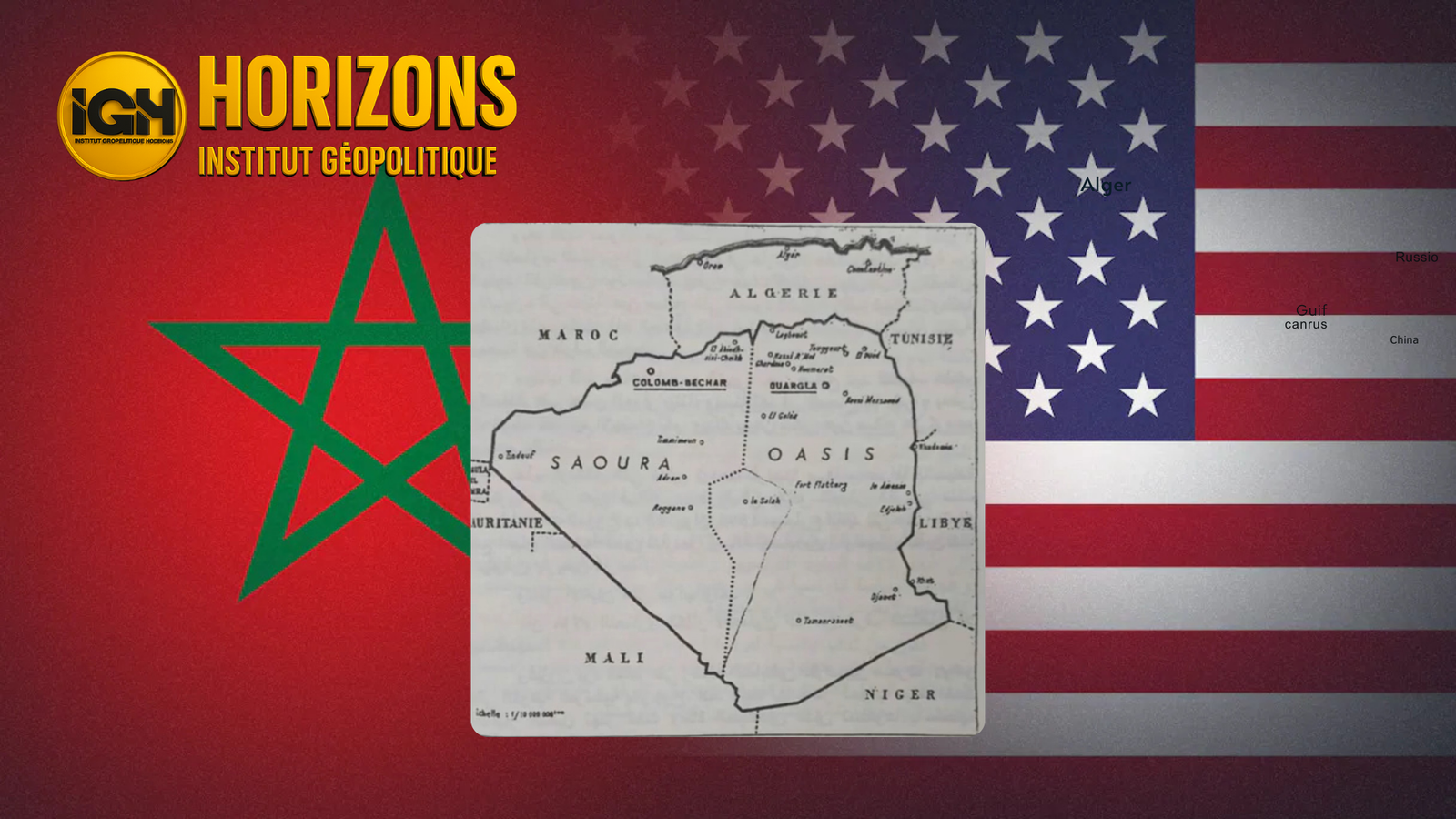
- Border delimitation
- Tripartite normalization with Israel (Algeria-Mauritania-Morocco)
- Co-exploitation of the Gara Djebilet iron deposit according to the 1972 agreement
The eleven complete American demands revealed by our sources:
- Correct its diplomatic behavior
- Review its political doctrine
- Distance itself from Russia
- Stop its armament program
- Urgent economic reform
- Reduce tensions with neighbors
- Normalize with Morocco
- Clear cooperation on terrorism
- Return to the AMU (Arab Maghreb Union)
- Disarmament of Polisario
- Dissolution of Tindouf camps and integration of Arab Sahrawi tribes among certain Arab tribes of Mauritania
This expanded roadmap, developed in the context of the Harris mission of September 2023 and continued by Massad Boulos, constitutes in reality a complete program of « bringing to heel » the Algerian regime, affecting its political, diplomatic, economic and military foundations.
This roadmap, if it authentically reflects American intentions, frontally attacks all the pillars on which post-independence Algeria has been built: non-alignment as diplomatic doctrine, anti-imperialism as revolutionary legitimacy, the rentier economy as development model, and military hypertrophy as regime survival guarantee. Analysis of these demands reveals a logic of methodical deconstruction of the Algerian state as it has existed since 1962.
⚠️ Critical IGH Assessment
The American roadmap does not constitute mediation but a veritable ultimatum aimed at complete transformation of the Algerian state. Its acceptance would presuppose the prior collapse of the current political system, which explains the structural impossibility of its realization in the present context.
Systemic Deconstruction of the Algerian State: Anatomy of a « Bringing to Heel »
The eleven American demands revealed constitute a complete program for dismantling the ideological and structural foundations of independent Algeria. This « bringing to heel » strategy is articulated around five transformation axes that challenge sixty-three years of Algerian state construction.
First Axis: Destruction of Non-Aligned Diplomatic Doctrine
The demand to « correct diplomatic behavior » and « review political doctrine » directly targets the Boumediene legacy of non-alignment. Since 1962, Algerian foreign policy has been built on rejection of blocs, anti-imperialism and support for liberation movements. This posture, inscribed in the revolutionary DNA of the regime, constitutes one of its last elements of historical legitimacy.
The requirement to « distance itself from Russia » would signify the definitive rupture of the umbilical cord that has linked Algeria, since its creation in 1962, to the USSR then to Russia. This partnership, symbolized by massive arms contracts and energy cooperation, represents for Algiers a credible alternative to Western dependence. Its questioning would amount to forced alignment with the Atlantic axis, negating sixty years of alliance diversification policy.
Second Axis: Disarmament and Military Subordination
The « halt of the armament program » constitutes the most revolutionary demand of this roadmap, as it means definitively relegating the military oligarchy not only to a secondary role but excluding it from the political decision-making field. Since independence, Algeria has made its military power the guarantor of its sovereignty and regional projection. With a defense budget representing approximately 6% of GDP and arms acquisitions estimated at more than $60 billion since 2000¹, the ANP constitutes the backbone of the Algerian political system.
This demand touches the heart of the Algerian military-industrial complex, generator of substantial rents for the ruling oligarchy. The « disarmament of Polisario » completes this strategy by depriving Algeria of its main regional leverage, de facto transforming the Western Sahara conflict in favor of Morocco.
Third Axis: Dismantling the Rentier Economy
« Urgent economic reform » constitutes a veritable « time bomb » for the Algerian system since it would call into question the balance and social peace that rest entirely on these subsidies. This reform targets the Algerian economic model based on hydrocarbon rent since the 1971 nationalization. This rentier economy, which still represents 95% of exports and 60% of the state budget, constitutes the material foundation of the Algerian political system. Its transformation would presuppose massive liberalization and opening to Western investments, calling into question state control over strategic resources.
The « return to the AMU » fits into this logic of regional economic integration under Western tutelage, transforming Algeria from an autonomous economy into a link in an externally controlled value chain.
Fourth Axis: Social Engineering and Demographic Reconfiguration
The « dissolution of Tindouf camps » and « integration of members of Arab Sahrawi tribes among certain Arab tribes of Mauritania » reveal a particularly concerning dimension of social engineering. This demand aims to definitively resolve the Sahrawi question through forced dispersion of populations held by Polisario.
The instrumentalization of Mauritanian ethnic cleavages (« strengthen the country of Bidanes frustrated by the rise of Haratines ») reveals an approach to regulating regional social balances, transforming populations into geopolitical adjustment variables in order to attempt to reduce certain ethnic disparities and rebalance a tribal balance of power in Mauritania.
Fifth Axis: Total Geopolitical Normalization
« Normalization with Morocco » and « tripartite normalization with Israel » aim to definitively extract Algeria from its regional resistance posture. This double normalization would amount to abandoning the Palestinian and Sahrawi causes, pillars of Algerian revolutionary legitimacy since 1962.
« Clear cooperation on terrorism » completes this integration by transforming Algeria into a security subcontractor for NATO in the Sahelo-Saharan region, abandoning its military sovereignty in favor of Atlantic coordination.
💡 IGH Recommendation
Any regional mediation must imperatively avoid instrumentalization of ethnic and social cleavages. An inclusive approach respectful of community balances constitutes an indispensable prerequisite for any lasting stabilization of the Western Maghreb.
Confrontation with Historical Foundations of the Algerian State
This American roadmap enters into frontal collision with all fundamental pillars on which independent Algeria has been built since its creation in 1962. Analysis of this confrontation reveals the revolutionary magnitude of the transformations demanded.
Contradiction with Revolutionary Heritage
Algeria was built on the myth of anti-colonial revolution and resistance to Western imperialism. The Algiers Charter of 1964, the National Charter of 1976, and even the 2020 Constitution enshrine in constitutional stone support for peoples in struggle and non-alignment. Accepting normalization with Israel and abandoning the Palestinian cause would amount to denying sixty years of official discourse and emptying the regime’s revolutionary identity of meaning.
Challenging the Politico-Military System
Since Boumediene’s coup in 1965, Algeria has functioned as a military republic where the ANP constitutes the supreme arbiter of political power. The system of military clans, organized around control of armament rents and public contracts, would see its economic foundations destroyed by halting the armament program. This demand amounts to requesting transformation of a military republic into a civil state, a process that would require a genuine and radical internal political revolution.
Contradiction with the Rentier Economic Model
The Algerian economy has rested since hydrocarbon nationalization on a redistributive model where the welfare state finances social peace through energy rent. This system, which directly or indirectly employs more than 70% of the active population, constitutes the implicit social contract between the regime and society. Its questioning through « urgent economic reform » would presuppose accepting mass unemployment and major social instability, risks that the regime cannot assume without substantial political guarantees.
Negation of Sahelian Geopolitics
Since the 1990s, Algeria has developed an autonomous strategy for securing its southern flank, based on negotiation with armed groups and rejection of foreign intervention. This doctrine, formalized in the Algerian approach to the Malian crisis, frontally opposes the logic of Western intervention advocated by « clear cooperation on terrorism. » Accepting this cooperation would amount to abandoning its security sovereignty in favor of Atlantic subordination.
Attempts at Cosmetic Modernization: The Illusion of Symbolic Reforms
The historic appointments of women generals by Tebboune on July 4, 2025, fit into a logic of cosmetic modernization faced with international pressures. This decision, however symbolic, reveals an attempt to present an opening of the Algerian politico-military system without real structural transformation.
These appointments, occurring in a context of heightened diplomatic tensions, constitute a classic political signal: showing capacity for reform while avoiding fundamental transformations. This communication strategy does not respond to the structural demands of the American roadmap but allows the regime to claim progressive modernization.
⚠️ Analytical Alert
The absence of unified leadership within the Algerian establishment constitutes the main obstacle to any credible negotiation. Rivalries between military clans and fragmentation of decision-making power make improbable the emergence of consensus on such profound transformation.
Structural Obstacles to Realization
The first obstacle lies in the chronic inability of the Algerian regime to elaborate a coherent strategy. Since 2019, Algeria has multiplied contradictory decisions and diplomatic about-faces, revealing an absence of long-term vision. The closure of airspace to Morocco, rupture of diplomatic relations, then aborted rapprochement attempts illustrate this structural unpredictability.
The second obstacle concerns the pathological obsession with Morocco, which has become a constitutive element of Algerian geopolitical identity. This fixation, instrumentalized as a lever for internal legitimation, cannot be resolved by a simple political decision. It would require complete overhaul of the Algerian national narrative, a process that would take decades to materialize.
The third obstacle touches the economic interests of the Algerian military-industrial complex. The armament program, far from being a simple diplomatic posture, generates substantial rents for the military oligarchy. Its halt would presuppose complete reconfiguration of internal power balances, a highly improbable process without major crisis.
Moroccan Constraints and Opportunities
On the Moroccan side, accepting such mediation raises several strategic questions. Morocco, in a position of strength after successive international recognitions of its sovereignty over Western Sahara, has no immediate interest in substantial concessions.
The Moroccan Constitution, which refers to « true borders, » and the « Greater Morocco » map present in the royal office, constitute strong symbolic markers. Any negotiation involving territorial renunciations would presuppose constitutional revision, a politically complex and potentially destabilizing process.
Historical analysis reveals a recurrence of agreements not respected by Algeria. The 1961 agreement between Mohammed V and the GPRA, the Ifrane Agreement of 1969, the Border Convention of 1972, and multiple cooperation protocols have all been called into question by Algiers. This historical constant legitimately nourishes Moroccan mistrust vis-à-vis any new bilateral commitment.
Mauritanian Dimension and Societal Risks
Mauritanian involvement in this mediation reveals a particularly concerning dimension of social engineering. Tensions between Bidhan (White Moors) and Haratines (descendants of former black slaves) in Mauritania are deeply rooted in the country’s social history. The Haratines, who represent approximately 40% of the total population, have long been subjected to a persistent slavery and feudal system.
Mauritanian demographic evolution reveals a concerning trend for traditional balances. With an annual growth rate of 3.1% and a very young population, the Haratines could benefit from faster demographic growth than the Bidhan, progressively modifying the country’s demographic composition.
The « dissolution of Tindouf camps with integration in Mauritania » of Sahrawi populations reveals instrumentalization of Mauritanian demographic imbalances for purposes of regional geopolitical regulation. This ethnicist approach could paradoxically constitute a major destabilization factor.
Continuity of Mediation under Trump Administration
This mediation, initiated by Joshua Harris under the Biden administration, continues today under the supervision of Massad Boulos, President Trump’s special advisor for Africa and the Middle East. This bipartisan continuity reveals the strategic importance accorded by Washington to this initiative.
Boulos announced a diplomatic tour of the Maghreb, including Morocco and Algeria, where he will address the Sahara question within the framework of an American desire to relaunch dialogue between Rabat and Algiers, with the objective of normalizing their relations and favoring a political solution based on the Moroccan autonomy plan.
Strategic Cross-Conclusion
This supposed American mediation reveals a maximalist approach with extremely low chances of success. It resembles more of a geopolitical ultimatum than balanced mediation, aiming for complete overhaul of Maghrebi security architecture under American hegemony.
Structural obstacles on the Algerian side, combined with legitimate Moroccan reservations and risks of Mauritanian destabilization, make improbable the realization of this roadmap in the current context. Recent appointments of women generals by Tebboune, though historic, constitute only cosmetic modernization faced with American structural demands.
The most probable evolution horizon remains that of progressive and conditional normalization, articulated around sectoral dossiers (economy, security, energy) rather than global systemic transformation.
IGH Methodological Note
This analysis relies on exclusive IGH information, gathered from various sources close to this American mediation. With limited primary sources, the assessment rests on structural analysis of concerned actors and regional geopolitical expertise.
Footnotes:
¹ SIPRI 2024 database on international arms transfers – Algeria.
² Le Desk, “Sahara: American diplomat Joshua Harris visits Morocco and Algeria,” September 2023.
³ Agence France-Presse, “Algeria: Tebboune appoints several women generals,” July 4, 2025.
⁴ Franco-Maghrebi diplomatic archives, Mohammed V-GPRA Agreement, July 6, 1961.
⁵ International Crisis Group Report, “Managing intercommunity tensions in Mauritania,” 2023.
⁶ L’Opinion, “Sahara: Washington prepares mediation between Morocco and Algeria,” 2025.